Bratska Kuća and Stopa sv. Martina in Donje Selo
Bratska Kuća is located in the old stone core of Donje Selo on the island of Šolta. This historical space is associated with the Brotherhood of St. Martin and has a long tradition of venerating the patron saint of the area. On the façade of the house, there is a marker known as Stopa sv. Martina, which has led to Donje Selo being included in the European cultural route dedicated to St. Martin of Tours.
Bratska Kuća is neither a palace nor a large public building. Externally, it blends into the traditional architecture of the village, featuring stone walls and a simple façade. Its significance does not stem from its monumental nature, but rather from the role that brotherhoods once played in the religious and social life of small Dalmatian communities.
Brotherhoods gathered residents connected to the parish and the veneration of a particular saint. They assisted in organising processions, church celebrations, and the maintenance of sacred buildings, while also fulfilling an important social role. Members of the brotherhood provided aid to the sick, the poor, and families of deceased members, and participated in matters significant to the entire village.
In Donje Selo, the brotherhood was dedicated to St. Martin the Bishop, the patron saint of the local parish church. Bratska Kuća served as a gathering place, a venue for discussions, and a repository for items related to its activities.
The most recognisable feature of the house today is Stopa sv. Martina. This relief marker, shaped like a footprint, has been established as a sign of belonging to the European network of places connected to the life, cult, and message of St. Martin of Tours.
The footprint does not indicate that St. Martin personally visited Donje Selo. Rather, it serves as a contemporary symbol of the cultural and spiritual connections of places that preserve churches, customs, brotherhoods, or other forms of heritage dedicated to this saint.
St. Martin lived in the 4th century and is best known for the story in which, as a Roman soldier, he cut his cloak in half and gave one part to a freezing beggar. Consequently, his name is associated with mercy, sharing, and caring for the less fortunate.
The theme of sharing is the central message of the European route of St. Martin. This route connects locations across several European countries, from the area of his birth in present-day Hungary to Tours in France, where he served as a bishop and where his most famous shrine is located.
Donje Selo is part of this network thanks to the church of St. Martin, the local brotherhood, and the preserved Martin tradition. The establishment of Stopa sv. Martina has given local heritage a broader European context.
The marker should be viewed alongside the church of St. Martin, which is situated within the same historical core of the village. The church houses valuable artworks, an early Christian sarcophagus, and traces of centuries of sacred history, while Bratska Kuća represents the social aspect of the former parish community.
Bratska Kuća is not arranged as a museum with fixed opening hours. Visitors generally view it from the outside, from the public street, where the Stopa sv. Martina marker can be seen on the façade.
Access to the interior depends on whether a meeting, cultural programme, exhibition, or other public event is taking place. It should not be assumed that the house is open for tourist visits on a daily basis.
No ticket is required to view the exterior and the marker. The visit is brief, so it is best included in a walk around the old core of Donje Selo and combined with a visit to the church of St. Martin.
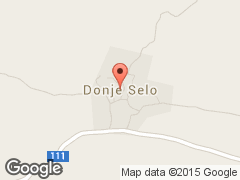
Donje Selo can be reached via the road connecting Grohote, Srednje Selo, and Maslinica. The drive from Grohote takes just a few minutes, and the area is also accessible by the island bus that operates between the ferry port of Rogač and the western part of Šolta.
Bratska Kuća is situated among old stone houses, where the streets and passages can be quite narrow in places. It is advisable to leave the car at a permitted widening along the wider road and continue on foot to the location.
It is not practical to enter the old core with a larger vehicle. Some passages end at private courtyards, and there is limited space for turning around.
The ground around the house is partly stony and may be uneven. Access may be challenging for individuals with reduced mobility, although the external marker can be viewed without extensive walking.
When exploring, it is important to respect the privacy of the surrounding residents. Old houses, courtyards, and passages are not automatically open to the public, so Stopa sv. Martina should be observed from public areas.
Bratska Kuća and Stopa sv. Martina are not major tourist attractions nor places with numerous amenities. Their value lies in the story they connect: the old village brotherhood, the parish church, the local tradition of assistance, and the European cultural route dedicated to one of the most revered Christian saints.
For visitors passing through Donje Selo, this is a small but distinctive detail that illustrates how a quiet place on Šolta is part of a much broader European narrative.


Brotherhood House and the Footprint of St. Martin / Comments
Looks like you are not signed in!
How would you like to proceed?
Anonymous comment
Login
Register
Your comment was submitted successfully and it will be published after approval by administrator!
General Conditions of Publiciation
General terms and conditions and notes
1. Web page
Web page www.holiday-link.com is an interactive web page where the visitors can put texts, news, photos and video movies regarding the content about tourism, gastronomy, culture and entertainment. Information can be uploaded by the owners, managers, employees, tourist boards, residents and tourists, basically all those who want to introduce the public to the specific content (facilities). The site allows evaluation of the attractiveness of a specific content and it allows writing comments by other visitors. Visitors, who log in and want to publish an information about some content (facility) or promote some tourist service, become users or suppliers and they agree to the general terms and conditions that are stipulated here and are obliged to act in accordance with the general terms and conditions (general conditions do not apply if a person is only visiting the page). A person can become a user by signing up with a user name and a password. The user agrees to put the accurate access data, name and surname and the address. Contents that users publish will be signed with a nickname they choose, while the personal data will be used in accordance with the privacy statement. Persons under the age of thirteen are not allowed to enter any content. General terms can be changed from time to time and if the user or supplier doesn’t agree with the changed general terms and conditions he can remove his content from the site.
2. Content
The page is not the media that publishes editorial program contents but the page where the visitors publish information that serve for the educational and cultural public informing about the touristic, cultural and gastronomic contents (facilities). The goal of the site is to collect the information that will give the tourists, as well as the locals, the insight into touristic, cultural and gastronomic offer of the certain location (city, region and country). Publishing the information about the content (information on facilities) is completely free of charge. Except the touristic content , on these pages, providers of various services in tourism may publish and advertise services they offer. These are, further in the text, referred to as a suppliers. Users and suppliers are solely responsible for the publication of their contents in accordance with the statement of responsibility.
3. User obligations
Each user is obliged to use the website in accordance with the general terms and conditions. By publishing the certain text, comment, photo or video movie on the site, the user guarantees that the published information are true, and that they are not copyrighted by a third party. Each user is morally and materially responsible for the publication of content. It is forbidden to copy texts from other websites. Administrators review entered contents and approve them for publishing. Holiday-Link.com has the right not to show the content it finds inappropriate, untrue or offensive. The owners, managers or employees of the gastronomic facilities (eg. restaurants) have the right to reply to the articles and comments on their own content. The owners have the right to request the removal of the text regarding their facilities if they find it inappropriate. The complaint can be send to complain@holiday-link.com. By publishing the content, the user is giving the exclusive, royalty-free, perpetual transferable, irrevocable and fully sublicensable licence (copyright) to use, reproduce modify, adapt, translate, distribute, publish and publicly display subscribed content to the Holiday-Link.com and its affiliates.
4. The obligations of suppliers of tourist services (accommodation and other services)
Company Holiday-Link.com Ltd acts as advertising website on this website and not as a tour operator or intermediary travel agency. Suppliers of tourist services who register their capacity on this site, pay the commercial advertising model they choose. Interaction, regarding arranging a specific accommodation or other tourist service, is done directly between supplier and visitor. Visitors arrange the accommodation or some other touristic service directly with the suppliers and pay the arranged service to them. Suppliers are responsible for all entered data, images, prices and more. Suppliers guarantee that they have all licences necessary to carry out the services they offer, and to operate in accordance with the laws of their home country. By purchasing certain service, visitor accepts the terms and conditions of a supplier from whom he purchased the service. Holiday-Link will check each supplier before putting its facilities to be visible on the page.
5. Statement of Responsibility
The information, that users and suppliers are entering, can be wrong. Holiday-Link.com does not check the entry of the information, pictures and movies and cannot guarantee their accuracy and it disclaims any responsibility for any incorrect data. If you notice a certain misstatement, inaccuracy or inadequacy in any content, please contact us by e-mail: complain@holiday-link.com The responsibility, for every information about some content, is on the user who entered the information. Suppliers, who advertise touristic services via this website, act as independent entrepreneurs. They enter the data about their services , as well as the pictures and the prices, on their own. Holiday-Link.com does not check entered data and disclaims responsibility regarding the errors that can occur during the entering. Suppliers have to own all the licences regarding the services they offer, and they have to respect the laws and regulations of the home country. Visitor arranges the specific service directly with the supplier, on the basis of data that is entered by a supplier as independent entrepreneur, and he pays it directly to the supplier. Therefore, Holiday-Link.com disclaims responsibility for any problem related to the certain reservation.
6. Privacy Policy
When logging into the website, users and suppliers have to enter some personal data (name and surname, e-mail, address, phone number, etc.). Holiday-Link.com guarantees that this data will be kept secret and will not be forwarded to the third parties. Holiday-Link.com can use an user and a supplier e-mail for sending necessarry informaion and for advertising.
7. Cookie Policy
Cookies are small text files that can be stored into device of a visitor if it is allowed by a web browser. Holiday-Link.com uses cookies to provide a better user experience on the website for the visitors. Also, while visiting Holiday-Link.com, you can automatically collect a certain data.
8. Court Jurisdiction
In case of any dispute, related to the site holiday-link.com, the court in Split and the Croatian law are competent.