Must visit(/)
Visit(/)
Skip(/)
Srednje Selo Šolta – Old Town, Attractions and Guide
| Tourist guide Srednje Selo | Tourist facilities |
Srednje Selo on Šolta – A Quiet Stone Village Above Šoltansko Polje
Srednje Selo is one of those places on Šolta that many pass through on their way to Maslinica, without taking the time to explore its ancient stone streets. Nestled between Grohote and Donje Selo, it sits on gentle slopes above Šoltansko polje, away from the sea and the tourist bustle of coastal settlements.
There is no promenade, marina, well-maintained beaches, or a long line of restaurants here. Srednje Selo is appealing precisely because of its quiet streets, traditional stone houses, old courtyards, and views of the island's interior, which generations of residents have cultivated as olive growers, vintners, and farmers.
The village is small and can be explored at a leisurely pace, but for visitors who appreciate traditional architecture, photography, and peaceful walks, it can reveal one of the most authentic sides of Šolta.
Where is Srednje Selo?
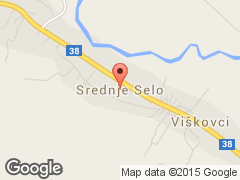
Srednje Selo is located in the western part of Šolta's interior, along the road that leads from Grohote to Donje Selo and Maslinica. It is positioned on the northern edge of Šoltansko polje, on slightly elevated terrain from which views of the field and island landscape can be seen between the houses and vegetation.
It is just a few minutes' drive from Grohote, and the road quickly continues west towards Donje Selo. The ferry port in Rogač is also easily accessible via Grohote, making the village well-connected to the island's main entry point.
Although it is situated along an important island road, the main historical part of the village is set back from traffic. A simple turn into one of the narrower streets will almost completely eliminate the noise of cars.
The Smallest Settlement on Šolta
Today, Srednje Selo is the smallest and least populated of the eight official settlements on the island. According to the 2021 Census, it had 102 residents.
However, the population figure does not tell the whole story. The closely packed houses, old school, and numerous residential complexes indicate that many more people lived here in the past. The village was closely linked to agriculture in Šoltansko polje, olive growing, viticulture, and livestock farming.
Residents would go to the fields daily, while the houses, cellars, storages, and courtyards were adapted for the life of a farming family. Today, some buildings have been restored and are used for living or holiday purposes, while others are empty, neglected, or partially collapsed.
This combination of preserved houses and signs of abandonment gives Srednje Selo a unique, somewhat melancholic character.
Medieval Origins of the Village
Unlike some other settlements on Šolta, whose continuity can be traced back to ancient times, Srednje Selo, according to the oldest known records, emerged during the Middle Ages.
The settlement developed in the island's interior, far enough from the coast to be less exposed to pirate and other attacks from the sea. Its location next to fertile fields allowed residents to engage in agriculture, while the compact houses and enclosed courtyards provided additional protection.
The village did not emerge according to a predetermined plan. Houses were built and expanded according to the needs of individual families, resulting in irregular streets, narrow passages, steps, and small extensions.
As a result, walking through the old part of Srednje Selo is much more interesting than a quick pass along the main road.
The Old Stone Core
The greatest value of Srednje Selo lies in its preserved rural core. Here, one can see stone houses with red roofs, external staircases, high walls around courtyards, old entrances to cellars, stone thresholds, and wooden shutters.
The houses are often connected into larger family complexes. Behind seemingly simple walls, there may be an inner courtyard, well or cistern, utility rooms, and stairs leading to the living floor.
The alleys are neither regular nor wide. Sometimes they narrow between houses, change direction, or end in front of private courtyards. Therefore, the village should be explored slowly, with respect for the privacy of the residents.
Not all passages are public. Open doors or stone arches do not mean that entry into the courtyard is permitted, and old houses and ruins should not be entered without the owner's consent.
Purtića Dvor and Lukin Dvor
Among the traditional residential complexes, Purtića Dvor and Lukin Dvor stand out. They are not tourist attractions arranged like museums, but parts of the old rural architecture of Srednje Selo.
The term “dvor” in this case does not refer to a palace or noble estate. It denotes a connected complex of family houses and utility rooms gathered around a shared courtyard.
Such complexes illustrated how larger island families once lived. In the same space, there were living quarters, cellars, storages, cisterns, tool areas, and parts related to the processing or storage of agricultural products.
Purtića Dvor and Lukin Dvor are best observed from the public streets. As some parts are private, abandoned, or sensitive due to age, one should not enter behind the walls or climb on the ruins.
Church of the Purification of the Blessed Virgin Mary
The main landmark of Srednje Selo is the parish church of the Purification of the Blessed Virgin Mary. Locals also refer to it as Gospa Svijećnica and Gospa Kandelora, after the feast celebrated on 2nd February.
The current church was built in 1882 from precisely carved stone, on the site of an older and smaller church building. Its façade is recognisable by its arched entrance, large round window, public clock, and stone bell tower with space for three bells.
Inside, there are three marble altars, crafted by the Split stonemason Pavle Bilinić. The main altar features a depiction of the Presentation of Jesus at the Temple, a motif directly related to the church's titular.
Some of the inventory was transferred from the older church that once stood on the same site. Among the older items, a chalice engraved with the year 1564 stands out, confirming the long continuity of church life in Srednje Selo.
The church is active and does not have fixed tourist opening hours. The best opportunity to enter is before or after mass, while it can be viewed from the outside at any reasonable time of day.
The Old Village School
The abandoned old school is a clear reminder of a time when more families and children lived in Srednje Selo. The building is not arranged as a museum nor does it have organised tours, but it is an important part of the story about the gradual decline in population.
Former schools in small island villages were not just places of education. They often served as important gathering points, for events and community life.
Today, the old school, along with the empty houses, illustrates how life in the interior of Šolta has changed over the past decades.
The building should be viewed from the outside, and entry into abandoned or damaged parts should be avoided.
Šoltansko Polje
Below Srednje Selo lies Šoltansko polje, a landscape that has defined the lives of its residents for centuries. The fields have been cultivated with vines, olives, grains, and other Mediterranean crops, while stone walls separated parcels and preserved the land.
Even today, one can see olive groves, field paths, dry stone walls, and cultivated areas in the surroundings. Some land is still in use, while some former parcels have become overgrown with scrub and low vegetation.
The view over the fields is particularly beautiful in spring when the vegetation is green, and in late summer and early autumn when the landscape takes on drier and warmer tones.
Visitors should keep in mind that field paths often run alongside private parcels. It is not permitted to enter olive groves, pick fruit, or cross closed paths.
A Walk Through Srednje Selo
A basic tour of the village takes between half an hour to an hour. It is best to start at the church, then proceed through the surrounding stone streets and seek out views of the old residential complexes and the fields.
The village does not have a designated tourist route with information boards at every turn. This makes the visit feel spontaneous and natural, but it requires a bit more attention when navigating.
The surface is partly asphalted, partly paved, and in older passages, it may be stony and uneven. In summer, it is best to visit in the morning or late afternoon as there is little shade in the more open areas.
Sturdy sandals or lightweight trainers are more suitable for walking than shoes with very thin soles.
Walking and Cycling
Srednje Selo is situated on a natural land route between Grohote, Donje Selo, and Maslinica. This route is suitable for guests who wish to explore the interior of Šolta on foot or by bicycle.
One of the most interesting options is to start from Grohote, pass through Srednje Selo and Donje Selo, and continue towards Maslinica. This route connects different parts of the island: its administrative centre, old agricultural villages, and the western coast.
However, the main road is not a designated pedestrian path. It is used by cars, buses, and other vehicles, and pavements are not available everywhere. Pedestrians and cyclists should be cautious, especially in bends and during periods of increased summer traffic.
For a longer walk, it is advisable to bring water as it is not always possible to buy drinks or other necessities in Srednje Selo.
Vrklina and Occasional Events
In the area of Vrklina, summer concerts, theatre performances, and other programmes are occasionally held. These are not daily events nor a permanent local manifestation, but part of an annual cultural programme that changes from season to season.
When an event is organised, Srednje Selo briefly takes on a different atmosphere. Locals and visitors gather outdoors, and the quiet space of the village becomes a stage for music or theatre.
Dates and programmes should be checked in the current calendar of the Tourist Board and Cultural Information Centre of Šolta. It is not advisable to plan a visit solely based on last year's programme.
Shops, Restaurants, and Cafés
In Srednje Selo, one should not expect a developed hospitality or retail offer. The village does not have a classic tourist centre with restaurants, cafés, souvenir shops, and stores open throughout the day.
For larger purchases, a pharmacy, post office, ATM, and most daily services, it is most practical to go to nearby Grohote.
For restaurants and evening outings, there are more options in Grohote, Maslinica, and other settlements along the coast. It is advisable to bring water before visiting Srednje Selo, especially during the summer months.
The lack of commercial amenities is not necessarily a drawback for visitors. This allows the village to remain peaceful, free from crowds and tourist noise.
Nearby Beaches
Srednje Selo does not have its own beach as it is located inland. The nearest coast is accessible to the north and west, but reaching the sea requires continuing by car, bicycle, or a longer walk.
One natural option is Donja Krušica, a small cove connected to Donje Selo. A descent leads to the northern coast, and the cove is much quieter than the larger bathing spots on Šolta.
To the west, one can continue to Maslinica, where there are organised and natural beaches, a marina, restaurants, and more tourist facilities.
Via Grohote, one can quickly reach Rogač and its beaches, while Nečujam and Stomorska are accessible by road towards the eastern part of the island.
Arrival from Rogač
Most visitors arrive in Šolta by ferry or fast boat from Split to Rogač. From the port, the road first leads to Grohote, and then continues west towards Srednje Selo and Donje Selo.
The drive from Rogač to Srednje Selo is short, but after the ferry arrives, traffic through Grohote can be heavy. Guests without cars can use the island bus that connects the port with the settlements on the island.
The bus timetable is generally aligned with the ferry schedules, but it changes during the season. Return times should be checked in advance, especially in the evening and outside the summer months.
Parking
There is no large tourist parking area in Srednje Selo designated for visiting the old town. It is best to leave the vehicle in a safe and permitted area along the wider road and explore the village on foot.
One should not drive deep into the narrow old streets. Some passages end in front of private houses, are very tight, or do not have enough space to turn around.
Vehicles should not be left in front of entrances to courtyards, at intersections, or in places where they could obstruct the passage of local residents or emergency services.
During occasional events in Vrklina, available spaces in the vicinity may fill up quickly.
Accessibility
Movement along the main road and wider parts of the village is possible for those with reduced mobility, but the old town is not fully adapted.
Narrow passages, slopes, stone surfaces, high thresholds, and steps can make access to certain areas difficult. The same applies to pushchairs, especially in older courtyard complexes.
The church can be viewed from the outside from a more accessible area, but the possibility of entering without steps or thresholds should be checked on-site.
Accommodation in Srednje Selo
In the village, one can find restored stone houses and private holiday properties. Such accommodation is suitable for guests seeking peace, privacy, and a central location for exploring the island.
Staying here means that reaching the beach, restaurants, and most amenities requires a car, bus, or bicycle. In return, one enjoys a quieter atmosphere than in coastal settlements and the opportunity to stay in a traditional island environment.
Before booking, it is useful to check whether the property has its own parking, how far it is from the bus stop, and whether access is possible for larger vehicles.
When to Visit Srednje Selo
Srednje Selo can be visited year-round. Spring is particularly pleasant due to the green landscape, blooming plants, and mild temperatures suitable for walking and cycling.
In summer, the village remains quieter than coastal places, but the stone streets and open areas can become quite hot. The best time to visit is early in the morning or later in the afternoon.
Early autumn brings pleasant temperatures and a period associated with the harvest of grapes and olives. At this time, the island's interior regains the importance it had during traditional agricultural life.
In winter, it is very quiet, and the number of open facilities across the island is lower. On the other hand, Srednje Selo can be experienced with almost no tourist traffic.
Who Will Enjoy Srednje Selo?
Srednje Selo will appeal most to visitors who appreciate small historical settlements, stone architecture, photography, leisurely walks, and places free from commercial crowds.
It is not suited for guests seeking a well-maintained beach, evening entertainment, a wide selection of restaurants, or facilities for all-day children's activities.
It is best included in a broader exploration of the interior of Šolta. A visit can be combined with Grohote, Donje Selo, Donja Krušica, and Maslinica or with a cycling trip through the western part of the island.
Why Visit Srednje Selo?
Srednje Selo is not a place of major attractions or landmarks that require an entrance fee. Its value lies in the preserved arrangement of stone houses, old family courtyards, the church, the abandoned school, and the landscape of Šoltansko polje.
Here, one can still understand what small agricultural settlements on the Dalmatian islands looked like before the development of coastal tourism. The houses do not face the sea and guests, but rather towards the courtyards, fields, and the lives of the families that built them.
A visit does not require much time, but one should slow down. Only after turning off the main road and entering among the old walls does it become clear why this small village deserves more than a brief glance through a car window.


Service information
- Timezone and time:
- Europe/Zagreb (04:31)
- Currency:
- Internet TLD:
- .hr
- Population:
- 110
- Altitude:
- 123 m
- Country code:
- +385
- Town code:
- 021
- Seas:
- Adriatic sea
- Languages spoken:
- Croatian
- Map position:
- 43.397695593647, 16.274494914209
Must visit
Public transport
Transportation stations (in range of 20 km)
- Plane:
- Split Airport
- Port:
- Rogac, Uvala Mala Luka
- Marinas, moorings and anchorages:
- Donja Krusica, Tatinja, Poganica, Necujam, Sesula, Maslinica, Joria, Gornja Krusica, Uvala Krnjas, Tanki Ratak, Duga Ciovo, Sveti Fumija, Vela Travna, Gokrug, Uvala Razetinovac, Livka, Donji Okrug, ACI marina Trogir, Seget, Stiniva - Milna, Vranjica, Bobovisca, Osibova, Marina Vlaska, Borak, Vinisce, ACI marina Milna, Vela Rina, Sutivan, ACI marina Split, Kastel Novi, Poljica, Marina Agana, Marina Zenta, Kastel Kambelovac, Marina Kastela
Publish tourist offer
Owners of apartments, rooms, houses, pensions, hotels, campsites and so on. Publish your offer FOR FREE. Payment shall be made only after the receipt of a specific inquiry or realized booking.
Publish an article
Owners, managers, employees
restaurants, clubs, events and other activities, write your review on the tourist map. Publish articles, photos and video FOR FREE.
Travelers You have visited an interesting restaurant, bar, attraction, event ? Share your positive experiences ! Write an article, post a video or photos you've taken.
Recommended locations
Croatia - All Destinations