Fishing Museum Vrboska – The History of Fishing and Coastal Life on Hvar Island
The Fishing Museum in Vrboska is one of the best places on Hvar to understand how the sea has shaped the lives of the island's inhabitants. For centuries, Vrboska has been a significant fishing community, with the catch of small pelagic fish being one of the reasons for the settlement's development during the 15th and 16th centuries.
Opened in 1972, it was the first museum of its kind on the Adriatic coast. Today, it operates as part of the Museum of the Municipality of Jelsa and houses authentic items largely donated by fishing families from Vrboska and other locations on Hvar.
Traditional Fishing Methods on Hvar
The main exhibition is dedicated to traditional fishing techniques.
Visitors can see various types of nets, hooks, longlines, harpoons, tools for repairing nets and sails, as well as equipment used during fishing.
Of particular interest is the display of historical night fishing under light. Before the advent of electric lighting, torches were used—iron structures placed at the bow of the boat where pine wood was burned to attract fish to the surface.
Alongside these, later lamps and other lighting equipment are exhibited, clearly illustrating how fishing methods have evolved over time.
Sardines and the Development of Vrboska
The history of Vrboska is closely linked to sardines and other small pelagic fish.
People from the island's interior began to settle in this deep and well-protected bay primarily for fishing. Over time, fishing developed into one of the most important economic activities in the area.
Thus, the museum's exhibits not only discuss fishing techniques but also the origins and development of Vrboska itself.
The Sardine Factory and the Industrial History of the Area
An important part of the exhibition is dedicated to the former fish processing factory in Vrboska.
The sardine factory was established in the late 19th century and was a vital part of the local economy for decades. It operated until 1972—the same year the Fishing Museum was opened.
The museum displays items related to the factory's operations, including equipment for processing and packaging fish, a can-sealing press, old advertisements, and other items that remind visitors of the time when fish processing was a significant source of income for the residents of Vrboska.
Barrels, Fish Salting, and Traditional Cuisine
Before modern refrigeration, fish had to be preserved in entirely different ways.
The exhibition includes wooden barrels used for salting and storing fish, as well as tools used to make them.
A special section of the museum is dedicated to traditional fishing cuisine. Old pots, dishes, and kitchen utensils are displayed, showcasing how fishing families prepared simple meals from the ingredients available to them.
There is also an interesting reconstruction of a traditional fishing house, providing a broader view of the daily life of families whose livelihoods were tied to the sea.
Adriatic Fauna
The museum also features a collection of preserved specimens of fish, crustaceans, molluscs, and sponges from the Adriatic Sea.
This part of the exhibition is particularly engaging for children and visitors keen to learn about the species traditionally caught or found in the waters around Hvar.
In this way, the museum transcends a classic collection of fishing tools and offers a broader picture of life in the Adriatic.
How Long Does a Visit Take?
The Fishing Museum is not large, and a visit does not require half a day.
Most visitors find that around 30 to 45 minutes is sufficient for a leisurely exploration of the collection, while those particularly interested in fishing, local history, and maritime heritage may linger a bit longer.
Due to its size, the museum can easily be incorporated into a walk around Vrboska.
Location in the Centre of Vrboska
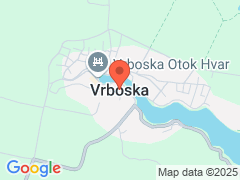
The museum is located in the town itself, just a few minutes' walk from the waterfront, bridges, and main attractions of Vrboska.
A visit can easily be combined with a tour of St. Lawrence Church, the fortress church of St. Mary of Mercy, and the old town centre.
As Vrboska is compact, a car is not necessary for exploring the centre.
Parking
The Fishing Museum does not have a large dedicated tourist car park immediately adjacent to the entrance.
If arriving by car, it is best to leave the vehicle in the available public parking areas in the wider centre of Vrboska and continue on foot to the museum.
During the peak summer season, visitors should expect higher demand for parking spaces, especially in the evenings and during busier times.
Can the Museum Be Visited Internally?
Yes. Unlike many smaller churches and historical sites on the island, the Fishing Museum is an organised museum institution, and the interior can regularly be visited when the museum is open.
Opening hours may vary by season, so it is advisable to check before your visit.
Useful Information
- Type of Content: Local historical and ethnographic museum
- Year Established: 1972
- Special Feature: The first fishing museum of its kind on the Adriatic coast
- Main Theme: The history of fishing and fishing life in Vrboska and on Hvar Island
- Fishing Equipment: Nets, hooks, longlines, harpoons, tools, and equipment for repairing nets
- Night Fishing: Exhibits include old torches and later lamps used for fishing under light
- Sardine Factory: A section of the exhibition is dedicated to the former fish processing factory in Vrboska
- Traditional Cuisine: Old kitchen items and equipment for preparing fish dishes are displayed
- Adriatic Fauna: Preserved specimens of fish, crustaceans, molluscs, and sponges
- Reconstruction: A part of a traditional fishing house is also displayed
- Visit Duration: Approximately 30 to 45 minutes
- Interior Viewing: Possible during museum opening hours
- Access: Most easily reached on foot from the centre of Vrboska
- Parking: No large dedicated parking next to the museum; use public parking in the wider centre
- Best For: Visitors interested in local history, fishing, maritime tradition, and the lives of islanders


Ribarski muzej / Comments
Looks like you are not signed in!
How would you like to proceed?
Anonymous comment
Login
Register
Your comment was submitted successfully and it will be published after approval by administrator!
General Conditions of Publiciation
General terms and conditions and notes
1. Web page
Web page www.holiday-link.com is an interactive web page where the visitors can put texts, news, photos and video movies regarding the content about tourism, gastronomy, culture and entertainment. Information can be uploaded by the owners, managers, employees, tourist boards, residents and tourists, basically all those who want to introduce the public to the specific content (facilities). The site allows evaluation of the attractiveness of a specific content and it allows writing comments by other visitors. Visitors, who log in and want to publish an information about some content (facility) or promote some tourist service, become users or suppliers and they agree to the general terms and conditions that are stipulated here and are obliged to act in accordance with the general terms and conditions (general conditions do not apply if a person is only visiting the page). A person can become a user by signing up with a user name and a password. The user agrees to put the accurate access data, name and surname and the address. Contents that users publish will be signed with a nickname they choose, while the personal data will be used in accordance with the privacy statement. Persons under the age of thirteen are not allowed to enter any content. General terms can be changed from time to time and if the user or supplier doesn’t agree with the changed general terms and conditions he can remove his content from the site.
2. Content
The page is not the media that publishes editorial program contents but the page where the visitors publish information that serve for the educational and cultural public informing about the touristic, cultural and gastronomic contents (facilities). The goal of the site is to collect the information that will give the tourists, as well as the locals, the insight into touristic, cultural and gastronomic offer of the certain location (city, region and country). Publishing the information about the content (information on facilities) is completely free of charge. Except the touristic content , on these pages, providers of various services in tourism may publish and advertise services they offer. These are, further in the text, referred to as a suppliers. Users and suppliers are solely responsible for the publication of their contents in accordance with the statement of responsibility.
3. User obligations
Each user is obliged to use the website in accordance with the general terms and conditions. By publishing the certain text, comment, photo or video movie on the site, the user guarantees that the published information are true, and that they are not copyrighted by a third party. Each user is morally and materially responsible for the publication of content. It is forbidden to copy texts from other websites. Administrators review entered contents and approve them for publishing. Holiday-Link.com has the right not to show the content it finds inappropriate, untrue or offensive. The owners, managers or employees of the gastronomic facilities (eg. restaurants) have the right to reply to the articles and comments on their own content. The owners have the right to request the removal of the text regarding their facilities if they find it inappropriate. The complaint can be send to complain@holiday-link.com. By publishing the content, the user is giving the exclusive, royalty-free, perpetual transferable, irrevocable and fully sublicensable licence (copyright) to use, reproduce modify, adapt, translate, distribute, publish and publicly display subscribed content to the Holiday-Link.com and its affiliates.
4. The obligations of suppliers of tourist services (accommodation and other services)
Company Holiday-Link.com Ltd acts as advertising website on this website and not as a tour operator or intermediary travel agency. Suppliers of tourist services who register their capacity on this site, pay the commercial advertising model they choose. Interaction, regarding arranging a specific accommodation or other tourist service, is done directly between supplier and visitor. Visitors arrange the accommodation or some other touristic service directly with the suppliers and pay the arranged service to them. Suppliers are responsible for all entered data, images, prices and more. Suppliers guarantee that they have all licences necessary to carry out the services they offer, and to operate in accordance with the laws of their home country. By purchasing certain service, visitor accepts the terms and conditions of a supplier from whom he purchased the service. Holiday-Link will check each supplier before putting its facilities to be visible on the page.
5. Statement of Responsibility
The information, that users and suppliers are entering, can be wrong. Holiday-Link.com does not check the entry of the information, pictures and movies and cannot guarantee their accuracy and it disclaims any responsibility for any incorrect data. If you notice a certain misstatement, inaccuracy or inadequacy in any content, please contact us by e-mail: complain@holiday-link.com The responsibility, for every information about some content, is on the user who entered the information. Suppliers, who advertise touristic services via this website, act as independent entrepreneurs. They enter the data about their services , as well as the pictures and the prices, on their own. Holiday-Link.com does not check entered data and disclaims responsibility regarding the errors that can occur during the entering. Suppliers have to own all the licences regarding the services they offer, and they have to respect the laws and regulations of the home country. Visitor arranges the specific service directly with the supplier, on the basis of data that is entered by a supplier as independent entrepreneur, and he pays it directly to the supplier. Therefore, Holiday-Link.com disclaims responsibility for any problem related to the certain reservation.
6. Privacy Policy
When logging into the website, users and suppliers have to enter some personal data (name and surname, e-mail, address, phone number, etc.). Holiday-Link.com guarantees that this data will be kept secret and will not be forwarded to the third parties. Holiday-Link.com can use an user and a supplier e-mail for sending necessarry informaion and for advertising.
7. Cookie Policy
Cookies are small text files that can be stored into device of a visitor if it is allowed by a web browser. Holiday-Link.com uses cookies to provide a better user experience on the website for the visitors. Also, while visiting Holiday-Link.com, you can automatically collect a certain data.
8. Court Jurisdiction
In case of any dispute, related to the site holiday-link.com, the court in Split and the Croatian law are competent.