Must visit(/)
Visit(/)
Skip(/)
Grohote Šolta – Attractions, History, Restaurants and Guide
| Tourist guide Grohote | Tourist facilities |
Grohote – Historical and Everyday Center of the Island of Šolta
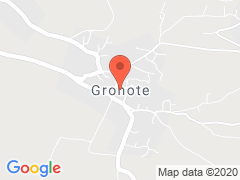
Grohote is located inland on Šolta, at the edge of the fertile Šoltansko field and at the main island crossroads from which roads lead to Rogač, Maslinica, Nečujam, Gornje Selo, and Stomorska. Although there is no waterfront or beach in the settlement itself, it is here that the everyday life of the island can best be observed, away from the tourist resorts by the sea.
It is the oldest and largest settlement on Šolta and serves as its administrative, transport, and service center. Grohote houses the Šolta Municipality, post office, clinic, pharmacy, police station, fire department, primary school, shops, and other services used by residents from across the island. As a result, the settlement remains active throughout the year and is not limited to the summer season.
Grohote is not arranged like a typical tourist destination with a long promenade, a series of souvenir shops, and restaurants by the sea. Its value lies in the old stone core, narrow streets, courtyards hidden behind high walls, historic buildings, and the feeling of being in a real island settlement rather than a tourist backdrop.
Old Town of Grohote
The most interesting part of the settlement is around St. Stephen's Church and Kaštel Slavić. The streets are narrow, irregular, and bordered by old stone houses, agricultural buildings, taverns, and enclosed courtyards. Many houses feature external staircases, stone thresholds, wooden shutters, and roofs covered with traditional tiles.
This layout was not accidental. Houses were built close to each other, and the walls and enclosed courtyards provided protection from the wind, summer heat, and past attacks from the sea. Grohote, like other old Šoltan villages, developed inland as coastal settlements were more exposed to pirates and other attackers for centuries.
A walk through the old town does not take long, but it is best not to limit yourself to the main road. A few steps into the side streets is enough to leave the traffic and daily rush behind, revealing stone passages, small courtyards, and views of the church bell tower.
St. Stephen the First Martyr Church
The main religious building in Grohote is the Church of St. Stephen the First Martyr. The tall stone bell tower with a reddish top is visible from various parts of the settlement and is one of the most recognizable landmarks in inland Šolta.
The current church is a large stone structure with neo-Renaissance features. Unlike many smaller island churches, its size and location indicate the importance Grohote held as a center for the entire island.
The church is an active place of worship and does not have a fixed tourist opening time. The best opportunity to enter is before or after mass and during holidays and special church events. When closed, it is worth admiring the facade, bell tower, and surrounding historic area.
Remains of the Early Christian Basilica
Adjacent to the church are the remains of an early Christian basilica, one of the most important archaeological sites on Šolta. The low parts of walls and foundations, remnants of a floor mosaic, and stone finds related to the former sacred complex have been preserved.
The basilica dates back to late antiquity and confirms that the area of Grohote was an important center of Christian life long before the construction of the current church. The site is not a large monumental ruin and can easily be overlooked if one does not know what to look for.
The most interesting preserved part is the mosaic with geometric motifs. Together with the remnants of the walls, it allows one to partially imagine the layout of the former building.
The site is open for viewing, without an entrance fee and without standard opening hours. It is necessary to walk carefully, not to step over the walls, and not to touch sensitive parts of the mosaic.
Old Cemetery and Vesna Parun's Grave
Next to the church and the remains of the basilica is the old cemetery of Grohote. In addition to ancient stone tombs and sarcophagi, it is known as the final resting place of Vesna Parun, one of the most significant Croatian poets of the 20th century.
Vesna Parun was not born on Šolta, but she was connected to Grohote through family roots. According to her own wish, she was buried in this cemetery, near her grandfather's grave.
Her grave is not a large memorial complex but a simple and peaceful place integrated among other graves. Visitors occasionally leave flowers, candles, or recall her verses at the grave.
The cemetery is still in use, so it should be visited quietly and respectfully. Photographing Vesna Parun's grave should be discreet, especially when there are other visitors or a church ceremony taking place.
Kaštel Slavić
Kaštel Slavić, also known as Slavić Tower, is the most important secular historical building in Grohote. It is located in the old town and is easily recognizable by its massive stone walls and high fortified shape.
The complex consists of interconnected parts that have been added and adapted over time. The tower served as a refuge for residents during periods when the island was threatened by attacks from the sea.
In the upper parts, defensive elements, small openings, and stone protrusions can still be recognized, indicating that the building was not an ordinary residential house. Thick walls, cisterns, and enclosed spaces allowed residents to temporarily shelter and defend themselves.
Today, Kaštel Slavić houses municipal administration offices, so the interior is not arranged as a museum with regular tourist visits. The building is mainly viewed from the outside, while its courtyard is occasionally used for cultural events.
Buktenica Gallery & Buktenica
Grohote holds a special place in the history of Šoltan painting. In its stone streets, Eugen Buktenica Đenko and Vicko Buktenica grew up, representatives of island naive whose works are strongly connected to the life, people, and landscape of Šolta.
Buktenica Gallery & Buktenica showcases works by both artists. The paintings feature island villages, fishermen, farmers, boats, processions, animals, fields, and scenes from everyday life.
Eugen Buktenica did not depict Šolta as a realistic postcard. His paintings are filled with small figures, bright colors, humor, and events occurring simultaneously in the same space. For this reason, they act as painted island stories.
Vicko Buktenica continued the family artistic tradition but developed his own painting expression. The joint exhibition allows for a comparison of the two authors who are connected by the same island and similar motifs, but differ in their approach to shaping space, color, and figures.
The gallery's opening hours may vary throughout the year. It is most active in summer and during exhibitions, workshops, and cultural programs, while visits outside the season are best checked in advance.
Connection of Grohote with Croatian Art and Television
In addition to Eugen and Vicko Buktenica, other Šoltan artists, including Marin Kalajzić and Dinko Sule, are also connected to Grohote. Therefore, the settlement has a much stronger artistic tradition than one might assume during a quick pass along the main road.
Scenes from the well-known Croatian television series Velo misto were also filmed in Grohote. The old stone streets, enclosed courtyards, and houses without modern interventions served as a convincing backdrop for depicting former Dalmatian life.
Island Honey and Beekeeping Tradition
Šolta is known for its honey made from wild rosemary, and the area of Grohote is associated with a long tradition of island beekeeping. Family farms in the vicinity offer honey, propolis, wax products, and other bee products.
A visit to a beekeeping farm is not the same as going to a store with fixed opening hours. Tours, tastings, and purchases are best arranged in advance, especially outside the main season.
This visit is interesting as it allows for an introduction to the plants from which Šoltan honey is made and how wind, drought, rosemary, and other island vegetation influence its taste.
Where to Eat and Drink Coffee
The most well-known place for a traditional meal in Grohote is Konoba Momčin Dvor. It is located along the main road and is famous for grilled dishes and traditional preparations of meat, fish, and octopus under the bell.
The bell needs to be ordered in advance as preparation takes several hours. This is especially true for larger groups and visits during the peak summer season.
For coffee and drinks, there are local cafes in the settlement. Kavana Mendula is located in the central part of Grohote and has an outdoor terrace, while Buffet Bejo and Buffet Grohote are simpler places where locals gather.
Grohote does not have a wide selection of restaurants like Maslinica or Stomorska. The advantage is that the local establishments are not solely focused on tourists but are part of the everyday life of the settlement.
Shops and Everyday Services
As Grohote is the center of the island, it is practical to do grocery shopping, pick up medications, visit the post office, or take care of other daily needs here. This is especially useful for guests staying in smaller coves and villages where there are no shops or limited offerings.
The opening hours of shops, post offices, pharmacies, and other services may be shorter than in cities, especially on Saturdays, Sundays, and outside the summer season. It is advisable to check before a special visit.
For larger purchases, it is not advisable to wait until late evening. Grohote has basic services needed for a stay on the island, but one should not expect a shopping center, large department store, or 24-hour store.
Beaches Near Grohote
Grohote is not located by the sea, but several beaches are just a short drive away. The nearest coastline is in Rogač, which once served as the port of Grohote.
In Rogač, there are beaches Banje, Luka Rogač, and other smaller coastal locations. They can be reached from Grohote by car or bus in a few minutes, while walking is possible but may not always be comfortable in summer due to the sun and traffic.
To the east are Nečujam and its beaches, and further on Stomorska. To the west, the road leads to Donje Selo, Maslinica, and the cove of Šešula.
On the southern side of the island are the more secluded coves of Tatinja and Jorja. Access to them is significantly more challenging as it leads along local and unpaved roads, but there are natural beaches and seasonal restaurants Lonely Paradise and Lero.
Arrival in Grohote from Split
To reach Šolta from Split, one can take a ferry or catamaran to the port of Rogač. The ferry carries cars and the journey usually takes about an hour, while the catamaran ride is shorter.
Rogač is approximately two kilometers from Grohote. By car, it takes a few minutes, and the drive goes uphill from the port towards the interior of the island.
Buses depart from Rogač at the arrival times of the ferry lines. One continues to the eastern part of the island, and the other to the west, with both routes passing through Grohote or its main crossroads.
When planning a return, it is necessary to coordinate the bus with the departure of the ferry or catamaran. The island timetable is adapted to the ferry lines but changes throughout the year.
Getting Around the Settlement
The main part of Grohote can be explored on foot. It takes just a few minutes to walk from the central crossroads to the church, Kaštel Slavić, and the old town.
The main road through the settlement can be busy, especially immediately after the arrival of the ferry when vehicles and buses from Rogač disperse to various parts of the island. Pedestrians should be cautious as the sidewalk is not equally wide along all parts of the route.
Within the old town, the streets are narrower and quieter, but the surface can be uneven in places. Sturdier footwear is more comfortable than very thin flip-flops, especially when visiting the church, cemetery, and archaeological site.
Parking
There is no large parking lot near each attraction in the old town. The streets around the church and Kaštel Slavić are narrow, and some passages primarily serve local residents and access to homes.
It is best to leave the car in a permitted spot along the wider road or in the central part of Grohote and explore the attractions on foot. One should not drive deep into the old streets if unfamiliar with the area.
During mass, funerals, cultural events, and summer evenings, parking spaces near the old town can fill up quickly. Vehicles should not be left in front of entrances to courtyards, at intersections, or in spaces needed for emergency services to pass.
Grohote for Persons with Reduced Mobility
The main shops, cafes, and public services are generally located along more accessible roads. The old town is more challenging due to stone passages, narrow streets, thresholds, steps, and uneven surfaces.
The exterior of the church and part of the area around the basilica can be seen without long walking, but access to all parts of the archaeological site and cemetery is not equally easy.
Before visiting the gallery or cultural event, it is useful to check the entrance and accessibility options, as the facilities are often located in old stone buildings that were not originally designed to meet modern accessibility standards.
When to Visit Grohote
Grohote can be visited year-round. In summer, it is livelier, gallery and cultural spaces are more frequently open, and it is easy to continue from the settlement to the beaches and restaurants in remote coves.
The most pleasant times for a walk through the old town are in the morning and late afternoon. In the middle of the day, the stone streets can be very warm, and in areas without tall houses and trees, there is not much shade.
Spring and early autumn are particularly good for longer walks, cycling, and exploring Šoltansko field. During this time, there are no large summer crowds, and temperatures are more pleasant.
In winter, the settlement shows its other side. There are not many tourists, but basic services, local shops, and some cafes are open, allowing for a clearer view of the island's daily rhythm.
Grohote as a Starting Point for Exploring Šolta
Due to its central location, Grohote is a practical base for exploring the entire island. Rogač and the ferry port can be reached very quickly, and the road to the east and west branches off right in the settlement.
In one day, it is possible to combine a morning walk in Grohote with swimming in Rogač or Nečujam. Another trip can lead from Gornje Selo to Stomorska, while to the west, one can visit Donje Selo, Maslinica, and the cove of Šešula.
For the more secluded southern coves, more planning is needed. The roads to Tatinja and Jorja are partly unpaved, so it is advisable to check the road conditions before departure, bring water, and avoid driving an unsuitable vehicle.
Grohote is also a good starting point for cycling tours. The main island roads pass through the settlement, and from them, side asphalt and unpaved roads lead through fields, olive groves, and the interior of the island.
Who Will Enjoy Grohote the Most
Grohote will be most suitable for travelers who want to experience Šolta beyond its beaches and marinas. This is a place for a peaceful walk, history, art, local coffee, and observing everyday island life.
It is not the best choice for guests who want to step out of their apartment directly onto a well-maintained beach or stroll along a promenade every evening. The sea is not far, but reaching it requires a car, bus, bicycle, or walking.
On the other hand, staying in Grohote provides good connectivity to the entire island, proximity to the ferry port, and access to basic services. It is particularly practical for guests who want to change beaches and visit different places during their vacation.
Why Visit Grohote
Grohote may not be the most photographed place on Šolta, but it is key to understanding the island. Here, late antique remains, church tradition, defensive architecture, Šoltan naive, and ordinary everyday life converge.
In an area that can be explored in a calm morning, you can find St. Stephen's Church, the remains of the early Christian basilica, the old cemetery with Vesna Parun's grave, Kaštel Slavić, and Buktenica Gallery & Buktenica.
After the visit, one can sit down for coffee among the locals, have lunch in a tavern, buy basic groceries, and continue to any part of the island. This combination of history, practicality, and authentic life makes Grohote much more interesting than it may seem at first glance along the main road.


Service information
- Timezone and time:
- Europe/Zagreb (06:23)
- Currency:
- Euro
- Internet TLD:
- .hr
- Population:
- 450
- Altitude:
- 102 m
- Country code:
- +385
- Town code :
- 021
- Seas:
- Adriatic sea
- Languages spoken:
- Croatian
- Map position:
- 43.3913996, 16.2868173
Must visit
Public transport
Transportation stations (in range of 20 km)
- Plane:
- Split Airport
- Port:
- Rogac, Uvala Mala Luka
- Marinas, moorings and anchorages:
- Tatinja, Donja Krusica, Necujam, Poganica, Joria, Sesula, Maslinica, Gornja Krusica, Tanki Ratak, Vela Travna, Duga Ciovo, Uvala Krnjas, Livka, Sveti Fumija, Gokrug, Uvala Razetinovac, Donji Okrug, Stiniva - Milna, ACI marina Trogir, Seget, Bobovisca, Osibova, Marina Vlaska, ACI marina Milna, Sutivan, Vranjica, ACI marina Split, Borak, Vinisce, Vela Rina, Kastel Novi, Marina Zenta, Poljica, Mirca, Kastel Kambelovac, Marina Kastela, Marina Agana
Accommodation and offer: Vacation rentals
Showing 1-15 of 15 items.
Must visit(/)
Visit(/)
Skip(/)
Publish tourist offer
Owners of apartments, rooms, houses, pensions, hotels, campsites and so on. Publish your offer FOR FREE. Payment shall be made only after the receipt of a specific inquiry or realized booking.
Publish an article
Owners, managers, employees
restaurants, clubs, events and other activities, write your review on the tourist map. Publish articles, photos and video FOR FREE.
Travelers You have visited an interesting restaurant, bar, attraction, event ? Share your positive experiences ! Write an article, post a video or photos you've taken.
Recommended locations
Croatia - All Destinations