Gradina near Donje Selo – Prehistoric Site Above the Western Part of Šolta
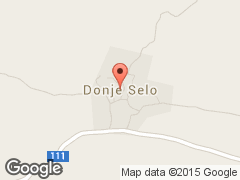
Gradina near Donje Selo is located on an elevation west of the settlement, in a landscape of dry stone walls, rocky terrain, and low Mediterranean vegetation. It is not a developed tourist attraction with parking, an entrance fee, or an interpretive center, but rather an archaeological site recognized by its location, wide stone ramparts, and traces of former structures.
The term 'gradina' in Dalmatia most often refers to a prehistoric fortified settlement or a lookout point situated on a hill. Such locations were chosen for their visibility of the terrain, natural defense, and oversight of routes connecting fields, settlements, and the coast.
Gradina near Donje Selo is associated with the Illyrian period, referring to the prehistoric population that lived on Šolta long before the arrival of the Romans. The site still features wide elliptical dry stone defensive belts, although some parts have become overgrown, collapsed, or covered by later stone mounds.
This site is significant as it demonstrates that the area of Donje Selo was not only inhabited during the medieval period. Archaeological traces in the vicinity include remnants of prehistoric buildings and graves, Roman agricultural estates, as well as late antique and early Christian sites.
At Gradina, remnants of walls from a rectangular structure with a floor mosaic have also been recorded. This finding indicates the use of the elevation or its immediate surroundings during the ancient period, but the site has not been sufficiently explored or arranged to clearly distinguish all historical layers without expert guidance.
Visitors should not expect fully excavated rooms, reconstructed houses, or large exposed mosaics. Most of what is visible consists of stone walls, dry stone defensive lines, piles of stones, and irregularities in the terrain that may easily appear as part of the natural landscape without prior knowledge.
For this reason, Gradina is more interesting to enthusiasts of archaeology, history, and hiking than to guests seeking a simple landmark for a quick photograph. To understand the site, it is useful to know that large stone rings and ramparts once enclosed the settlement area and protected its inhabitants.
The elevated position allowed for a good view of the surrounding area. From certain open parts, there are views towards Donje Selo, the interior of Šolta, and the surrounding hills, although visibility depends on vegetation and the part of the gradina that can be safely approached.
In 2025, Gradina was included in the professional program of the ILIRIKON conference, during which a guided tour of the site was organized. This confirms its archaeological importance, but does not mean that there is a permanent tourist route or guide that receives visitors daily.
How to Reach Gradina
Access begins from the area of Donje Selo and continues along local field paths towards the elevation. The exact route is not clearly marked everywhere, and some branches may lead to private parcels, olive groves, or neglected paths.
Municipal documents indicate an existing access route to Gradina approximately 650 meters long, but it is marked as a path that is not in use. Therefore, one should not expect a well-maintained road that can be safely accessed by car to the site itself.
The most reasonable option is to leave the vehicle in Donje Selo or at a permitted spot along the wider road and continue on foot. Before setting off independently, it is advisable to ask for local directions as standard road navigation may not recognize a passable and publicly accessible approach.
In some areas, there are no signposts, markings, or protective fences. Vegetation can spread over the path during spring and summer, and collapsed dry stone walls and loose stones can make movement difficult.
The route is not suitable for strollers, individuals with reduced mobility, or visitors in open city footwear. Closed shoes or hiking boots with good soles are necessary.
In summer, it is advisable to avoid midday as the terrain is mostly exposed to the sun. There is no water, restroom, food service, or arranged shelter at Gradina. It is necessary to bring enough water, a head covering, and sun protection.
After rain, stones and soil can be slippery, so the ascent is not recommended in poor weather. During periods of high temperatures, one should also be cautious of increased fire hazards and strictly adhere to fire bans.
Visiting Rules
Gradina is an archaeologically sensitive area. Stones should not be moved, removed, or stacked into new piles. Digging, using metal detectors, or searching for items for personal collections is not permitted.
Walking on top of the defensive walls is discouraged as some parts are unstable and may collapse. It is safer to move along existing paths and avoid overgrown edges, deep cracks, and invisible voids between stones.
The surrounding olive groves, vineyards, and agricultural parcels may be private. Closed gates, fences, and dry stone passages should not be crossed without the owner's permission.
It is best to organize a visit with a local or expert guide, especially if the goal is to understand the layout of the gradina and distinguish prehistoric ramparts from later agricultural dry stone walls.
When to Visit Gradina
The most pleasant time for a visit is spring or early autumn when temperatures are not too high, and the terrain is easier to traverse than during the peak summer heat.
In late spring, vegetation can be tall and dense, while in summer, due to drought, the rocky structures are more visible, but walking is significantly more strenuous. In winter, strong winds, wet stones, and muddy parts of the path may occur.
It is important to allow enough daylight for the visit and return. The site and access path are not illuminated, so returning in the evening without good knowledge of the route is not advisable.
What to Visit Nearby
A visit to Gradina is best combined with the old core of Donje Selo. The village features the Church of St. Martin, the Brotherhood House with the St. Martin's Stop, as well as traditional stone houses and paved passages.
Nearby is also the Church of St. Jela, built in an area with early Christian remains from the 6th century. Together with Gradina and findings from the ancient period, it illustrates how the history of Donje Selo predates the current appearance of the settlement.
After the visit, one can continue towards Donja Krušica on the northern coast or towards Maslinica, where there are beaches, restaurants, and more tourist facilities.
Is It Worth Visiting Gradina?
Gradina near Donje Selo is not an attraction suited for every visitor. Without signposts, a developed approach, and clear reconstructions, it may leave a modest impression on those expecting monumental ruins.
Its value lies in its authenticity. On the elevation, wide defensive dry stone walls and traces of a space that played an important role long before the creation of today's Šolta villages can still be traced.
For enthusiasts of history, archaeology, and lesser-known hiking destinations, Gradina is a valuable addition to a visit to Donje Selo. However, the arrival should be well prepared, respecting private land, and accepting that it is an undeveloped and still insufficiently explored site.


Illyrian Hillfort / Comments
Looks like you are not signed in!
How would you like to proceed?
Anonymous comment
Login
Register
Your comment was submitted successfully and it will be published after approval by administrator!
General Conditions of Publication
General Conditions of Publiciation
1. Web page
Web page www.holiday-link.com is an interactive web page where the visitors can put texts, news, photos and video movies regarding the content about tourism, gastronomy, culture and entertainment. Information can be uploaded by the owners, managers, employees, tourist boards, residents and tourists, basically all those who want to introduce the public to the specific content (facilities). The site allows evaluation of the attractiveness of a specific content and it allows writing comments by other visitors. Visitors, who log in and want to publish an information about some content (facility) or promote some tourist service, become users or suppliers and they agree to the general terms and conditions that are stipulated here and are obliged to act in accordance with the general terms and conditions (general conditions do not apply if a person is only visiting the page). A person can become a user by signing up with a user name and a password. The user agrees to put the accurate access data, name and surname and the address. Contents that users publish will be signed with a nickname they choose, while the personal data will be used in accordance with the privacy statement. Persons under the age of thirteen are not allowed to enter any content. General terms can be changed from time to time and if the user or supplier doesn’t agree with the changed general terms and conditions he can remove his content from the site.
2. Content
The page is not the media that publishes editorial program contents but the page where the visitors publish information that serve for the educational and cultural public informing about the touristic, cultural and gastronomic contents (facilities). The goal of the site is to collect the information that will give the tourists, as well as the locals, the insight into touristic, cultural and gastronomic offer of the certain location (city, region and country). Publishing the information about the content (information on facilities) is completely free of charge. Except the touristic content , on these pages, providers of various services in tourism may publish and advertise services they offer. These are, further in the text, referred to as a suppliers. Users and suppliers are solely responsible for the publication of their contents in accordance with the statement of responsibility.
3. User obligations
Each user is obliged to use the website in accordance with the general terms and conditions. By publishing the certain text, comment, photo or video movie on the site, the user guarantees that the published information are true, and that they are not copyrighted by a third party. Each user is morally and materially responsible for the publication of content. It is forbidden to copy texts from other websites. Administrators review entered contents and approve them for publishing. Holiday-Link.com has the right not to show the content it finds inappropriate, untrue or offensive. The owners, managers or employees of the gastronomic facilities (eg. restaurants) have the right to reply to the articles and comments on their own content. The owners have the right to request the removal of the text regarding their facilities if they find it inappropriate. The complaint can be send to complain@holiday-link.com. By publishing the content, the user is giving the exclusive, royalty-free, perpetual transferable, irrevocable and fully sublicensable licence (copyright) to use, reproduce modify, adapt, translate, distribute, publish and publicly display subscribed content to the Holiday-Link.com and its affiliates.
4. The obligations of suppliers of tourist services (accommodation and other services)
Company Holiday-Link.com Ltd acts as advertising website on this website and not as a tour operator or intermediary travel agency. Suppliers of tourist services who register their capacity on this site, pay the commercial advertising model they choose. Interaction, regarding arranging a specific accommodation or other tourist service, is done directly between supplier and visitor. Visitors arrange the accommodation or some other touristic service directly with the suppliers and pay the arranged service to them. Suppliers are responsible for all entered data, images, prices and more. Suppliers guarantee that they have all licences necessary to carry out the services they offer, and to operate in accordance with the laws of their home country. By purchasing certain service, visitor accepts the terms and conditions of a supplier from whom he purchased the service. Holiday-Link will check each supplier before putting its facilities to be visible on the page.
5. Statement of Responsibility
The information, that users and suppliers are entering, can be wrong. Holiday-Link.com does not check the entry of the information, pictures and movies and cannot guarantee their accuracy and it disclaims any responsibility for any incorrect data. If you notice a certain misstatement, inaccuracy or inadequacy in any content, please contact us by e-mail: complain@holiday-link.com The responsibility, for every information about some content, is on the user who entered the information. Suppliers, who advertise touristic services via this website, act as independent entrepreneurs. They enter the data about their services , as well as the pictures and the prices, on their own. Holiday-Link.com does not check entered data and disclaims responsibility regarding the errors that can occur during the entering. Suppliers have to own all the licences regarding the services they offer, and they have to respect the laws and regulations of the home country. Visitor arranges the specific service directly with the supplier, on the basis of data that is entered by a supplier as independent entrepreneur, and he pays it directly to the supplier. Therefore, Holiday-Link.com disclaims responsibility for any problem related to the certain reservation.
6. Privacy Policy
When logging into the website, users and suppliers have to enter some personal data (name and surname, e-mail, address, phone number, etc.). Holiday-Link.com guarantees that this data will be kept secret and will not be forwarded to the third parties. Holiday-Link.com can use an user and a supplier e-mail for sending necessarry informaion and for advertising.
7. Cookie Policy
Cookies are small text files that can be stored into device of a visitor if it is allowed by a web browser. Holiday-Link.com uses cookies to provide a better user experience on the website for the visitors. Also, while visiting Holiday-Link.com, you can automatically collect a certain data.
8. Court Jurisdiction
In case of any dispute, related to the site holiday-link.com, the court in Split and the Croatian law are competent.