Must visit(/)
Visit(/)
Skip(/)
Komiža on the Island of Vis – Beaches, Attractions, Excursions and Guide
| Tourist guide Komiza | Tourist facilities |
Komiža on the Island of Vis – Beaches, Attractions, Excursions and Guide
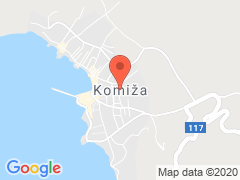
Komiža is located in a large bay on the western side of the island of Vis, beneath the steep slopes of Hum and facing Biševo and the open Adriatic Sea. Stone houses descend almost to the sea, narrow streets end at a quay filled with small boats, and beaches begin practically where the last houses end. Although it is now one of the most well-known tourist destinations on Vis, Komiža has not lost its unique character – a strong connection to fishing, the sea, and life on an offshore island.
Komiža is not a place visited for just one attraction. It is easy to fill several days here without extensive planning: in the morning, one can take a boat to Biševo and the Blue Cave, in the afternoon swim at Kamenice, Gusarica, or one of the smaller beaches along the bay, and in the evening return to the quay for dinner just a few meters from the sea. The next day, one can head towards Hum, Tito's Cave, or the hidden coves on the southern coast of Vis.
This combination of the sea, old stone streets, beaches accessible by foot, and excursions to the most remote Croatian islands makes Komiža one of the best bases for exploring the western part of Vis.
According to the 2021 Census, the settlement of Komiža has 1,261 inhabitants, while the broader administrative area of the City of Komiža includes small settlements inland as well as islands like Biševo and Palagruža.
What Does Komiža Look Like?
The center of Komiža developed around a natural harbor. The quay follows the curve of the bay, and behind it begins a dense network of old stone houses and very narrow streets. The majority of the historical core is best explored on foot – a car is generally not needed in the center and is not particularly practical.
The most beautiful part of Komiža is not just the quay itself. It is worth entering the small streets that lead several rows of houses away from the sea, passing by old stone houses, small squares, and alleys, and then descending back towards the coast.
The majority of the historical core was shaped during the period when Komiža was one of the most important fishing towns on the eastern Adriatic coast. The Croatian Encyclopedia states that Komiža appears in written sources as early as the mid-12th century, and from the 16th century, it developed particularly as a center for fishing. It was here that the famous Komiža fishing boat – gajeta falkuša – was perfected.
Fishing Komiža and the Gajeta Falkuša
It is difficult to understand Komiža without its fishermen.
Komiža fishermen did not stay close to the coast of Vis. For centuries, they ventured far towards Biševo, Sveca, and Palagruža, with the journey to Palagruža being particularly challenging, located dozens of nautical miles across open sea.
For such conditions, the gajeta falkuša was developed, a traditional wooden fishing boat that could sail with sails and oars, transport crew, nets, salt, and large catches, and be pulled up on the rocky shores of distant islands.
This tradition is not just a story from a museum today. The falkuša can still be seen in Komiža, and the historical route to Palagruža lives on through the event Rota Palagruzona. The official tourist board highlights the fishing history, the falkuša, and the offshore islands as the foundation of Komiža's identity.
Kaštel Komuna and the Fishing Museum
At the very quay stands the Kaštel Komuna, one of the most recognizable sites in Komiža.
The castle was built in the late 16th century for the defense of the town, and interestingly, its construction was not financed solely by state funds. Part of the funds was raised through the fishing of Komiža fishermen at the post office Trešjavac near Biševo. An inscription on the building still reminds of this connection between the castle and fishing.
Today, the Komuna houses the Fishing Museum, making it the best place to start learning about Komiža's fishing history. Among the most important exhibits, the traditional falkuša and the equipment used by generations of fishermen hold a special place.
From the terrace and the area around the Komuna, there is also a nice view of the Komiža harbor, the quay, and the houses lining the bay.
Muster – St. Nicholas Church Above Komiža
On the hill above the town is the Church of St. Nicholas, which the locals simply call Muster.
The name comes from the Latin monasterium – monastery. The Benedictines associated with Biševo had a monastic complex here during the Middle Ages, and parts of it are still preserved within the Muster. The church has been expanded and fortified over the centuries, and the preserved defensive tower is among the oldest such structures in Dalmatia.
Muster is particularly important on December 6, the feast of St. Nicholas, the protector of sailors, fishermen, and travelers. On this day, an old wooden boat is traditionally burned in front of the church – a symbolic sacrifice for the safety of the boats still sailing.
The Muster can be reached on foot from the center of Komiža, and its position above the town is worthwhile for a different view of the bay.
Gospa Gusarica and Old Churches of Komiža
By the sea on the western part of Komiža is the Church of St. Mary – Gospa Gusarica, one of the most interesting sacred buildings in the town.
Construction began in the mid-16th century, and it is unusual because it actually consists of three interconnected churches, which is clearly visible on the facade. An old legend is associated with its name, stating that pirates stole the image of the Virgin Mary, but after their shipwreck, the sea returned it in front of the church.
In old Komiža, it is also worth looking for the Church of Our Lady of Seven Sorrows – Nova Crikva, the fortified Church of St. Roch, the small Church of St. Blaise, and other sacred buildings scattered throughout the town and its surroundings.
The Church of St. Roch is particularly interesting. Its current form was established in the 18th century and was built like a defensive tower, with gunports and very few openings in the walls, reminiscent of a time when coastal towns were exposed to attacks from the sea.
Zanchi Palace and Old Stone Houses
Komiža was not only a fishing town. The wealth created from fishing, trade, and maritime activities left behind several significantly more luxurious houses.
One of the most interesting is the Zanchi Palace, locally known as Zonkotov paloc. It is located in a small square near the harbor and is recognizable by its long stone balcony, decorated chimney, roof houses, and unusual clay drain endings shaped like dragon heads.
Such buildings are best discovered without a specific route – by walking through the old core between the quay, the Komuna, and Gusarica.
Beaches in Komiža – From the Center to Hidden Coves
One of the great advantages of Komiža is that for good swimming, a car is not always necessary.
Along the eastern and western sides of Komiška Bay, there are many smaller pebble and rocky beaches. The official Tourist Board particularly highlights the beaches along the eastern coast of the bay, where cold water springs also appear.
Gusarica
Gusarica is one of the most famous beaches in Komiža and is located near the Church of Gospa Gusarica, not far from the center. It is pebbly, accessible on foot, and good for those who want to stay close to the quay and accommodations.
Kamenice
Kamenice is located east of the center and is among the most well-known beaches in Komiža. Its uniqueness lies in the cold springs that emerge among the rocks by the sea. The beach has natural shade, and during the summer, this part of the coast becomes one of the livelier places for going out in the evening. The official Tourist Board of Vis lists Kamenice as the most famous beach in Komiža.
Lučica
Lučica is a small town beach almost in the town itself. It is a good choice for a quick swim without special planning, especially if staying in the center of Komiža.
Novo Pošta
Novo Pošta is located east of the center and is one of the characteristic smaller beaches in that part of the coast. It is reached on foot from Komiža, making it a good alternative to busier bathing spots.
Bile Stine, Pizdica, Žanićovo and Other Small Beaches
Further walking along the coast leads to numerous smaller bathing spots such as Bile Stine, Pizdica, Žanićovo, Šporke žolo, Storo Pošta, and Žukamica. Some are just small pebbles or rocky parts of the coast, but the ability to change beaches without driving is one of the best features of Komiža.
For dog owners, there is also Vartalac, marked as a dog beach, while more remote parts of the coast have FKK locations. The official Tourist Board of Komiža maintains a large number of beaches and bathing spots in the city and its surroundings.
Pritišćina and Hidden Beaches Outside the Town
If one has a car or a boat, the options significantly expand.
On the southern side of the island, below Podhumlja, lies Pritišćina, a natural pebbly cove accessible via a dirt road for the last few kilometers. Nearby is the much smaller Mala Pritišćina, which is most conveniently approached from the sea.
On the northern side of Vis is Oključna, another isolated cove accessible by a dirt road or by boat.
Such beaches are not the best for everyone – they require more time, sometimes driving on poorer roads, and enough water and food – but they show how diverse the coastline around Komiža is.
Biševo and the Blue Cave – The Most Famous Excursion from Komiža
Komiža is the main starting point for Biševo and the Blue Cave.
Biševo is located southwest of Vis, and it can be reached by boat from Komiža. The most famous attraction is the Blue Cave in the Bay of Balun, whose characteristic blue light is created by the reflection of sunlight through an underwater opening.
Organized excursions usually lead to Mezuporata, where one transfers to small boats adapted for the low entrance to the cave.
However, if the weather permits, Biševo is worth exploring beyond the Blue Cave. Porat and Salbunara have sandy beaches that are rare on Vis, while hiking paths lead through the interior of the island towards Poje and the Church of St. Sylvester.
If one wants to experience Biševo more peacefully, it is better not to plan just a quick visit to the Blue Cave and an immediate return to Komiža.
Hum – The Best View Above Komiža
Above Komiža rises Hum, the highest peak of the island of Vis, standing at 587 meters.
The highest point itself is not freely accessible, but just below it is the Church of the Holy Spirit, at approximately 560 meters above sea level. This is one of the best viewpoints towards Komiža, Biševo, and the open sea.
The area of the Holy Spirit can be reached by road, and there is also a hiking ascent from Komiža. For walking, it is much more pleasant to start early in the morning or later in the afternoon than in the middle of a summer day.
The position of Komiža under Hum is also one of the reasons why the town is well sheltered from cold northern winds.
Tito's Cave
On the way to Hum is also Tito's Cave, one of the most famous locations on Vis associated with World War II.
It actually consists of two natural caves where Josip Broz Tito and his associates stayed and worked during 1944. From the road, one ascends stone steps to the site.
Tito's Cave is easiest to connect with an excursion to Hum and the Holy Spirit, as all locations are in the same part of the island's interior.
Excursions to Sveca, Brusnik, Jabuka, and Palagruža
Komiža has been oriented towards the open sea for centuries, and this is reflected in today's excursion offerings.
In addition to Biševo, boat trips are organized from Komiža to more distant islands such as Sveca – St. Andrew and Brusnik, while Jabuka and Palagruža are much more serious offshore destinations that require good weather and an appropriate boat.
Palagruža is particularly historically connected to Komiža through fishing and the Rota Palagruzona. The island is located about 42 nautical miles from Komiža, so it is not a typical short tourist trip.
The official tourist offer of Komiža lists Biševo, Sveca, Brusnik, Palagruža, and Jabuka among offshore destinations that are historically and touristically connected to the town.
What to Eat in Komiža?
Komiža is a place where at least one meal should be related to fish.
The most famous local specialty is komiška pogača, a traditional dish made from dough, salted fish, onions, and tomatoes. The addition of tomatoes is one of the characteristics that distinguishes it from viška pogača.
In restaurants and taverns, it is advisable to see what fresh fish and seafood are available that day, rather than deciding in advance what must be ordered. The Komiža fish market remains a part of the town's daily life, and the official Tourist Board of Vis particularly emphasizes the local tradition of fresh fish and fish restaurants.
Along with fish, it is worth trying local wines from Vis, especially varieties that are traditionally associated with the island.
Today, Komiža has enough restaurants, taverns, pizzerias, bistros, pastry shops, and bars to offer a variety of dining options for several days, but the greatest value remains the local Dalmatian and fish cuisine.
Events in Komiža
Summer in Komiža is not just a swimming season.
One of the most famous events is Fishermen's Night, a traditional celebration held on the first Saturday in August that connects fishing tradition, komiška pogača, island products, music, and events on the quay.
Rota Palagruzona brings to life the story of falkušas and the sailing of Komiža fishermen to Palagruža, while the Komiža Regatta brings a large fleet of modern sailboats to the route Split – Komiža – Split.
A special place in local tradition is held by the feast of St. Nicholas on December 6, when an old wooden boat is burned in front of Muster in honor of the protector of sailors.
During the summer, concerts, exhibitions, children's programs, cultural evenings, guided tours, and smaller events are also held. The current program is best checked shortly before arrival in the official calendar of the Komiža Tourist Board.
Komiža and the Film Mamma Mia! Here We Go Again
Visitors familiar with the film Mamma Mia! Here We Go Again may find some locations on Vis familiar.
The film was shot on the island of Vis in 2017, and Komiža was one of the official filming locations. The Croatian Audiovisual Centre specifically mentions Komiža and the houses along the sea in Komiža among the locations, while the entire island of Vis represented the fictional Greek island of Kalokairi in the film.
This is an interesting addition to a tour of the town today, but Komiža does not feel like a film set. On the contrary – the film utilized the existing stone houses, quay, and island landscape that were here long before the filming.
How to Get to Komiža?
The island of Vis is accessed by ferry or catamaran to the town of Vis, on the eastern side of the island. Komiža does not have a ferry port for regular transport of passengers and vehicles from the mainland.
From the town of Vis to Komiža is approximately 10 kilometers by road. After arriving by boat, one can continue by bus, taxi, or their own or rented vehicle. Bus departures are usually coordinated with the main regular boat lines, but the timetable should always be checked for the date of travel.
The drive between Vis and Komiža is itself a pleasant introduction to the western part of the island – the road crosses the interior and then descends towards Komiška Bay.
Parking in Komiža
A car is useful for exploring the rest of the island, but in the old part of Komiža, it is generally more practical to walk.
For visitors arriving by car, there is public parking at Rogači, while parking options closer to the historical core are limited, especially in July and August. The official Tourist Board of Komiža lists Rogači as public parking for visitors.
If accommodation is located in the old part of the town, it is advisable to ask the host in advance where to leave the vehicle. Many old streets were simply not built for today's car traffic.
Komiža Harbor and Arrival by Boat
Komiža does not have a classic large marina, but rather a town harbor with berths for visiting vessels.
On the inner side of the breakwater, there are about 30 berths, and water and electricity are available. The depth gradually decreases from the outer part of the breakwater towards the quay, approximately from six to two meters. During the main summer season, the berths fill up quickly.
Komiška Bay is open to western and southwestern winds, which is why boat arrivals should be planned more cautiously in poor conditions.
A significant advantage of berths in Komiža is that one disembarks practically in the very center of the town – just a few steps from restaurants, shops, and the old core.
When is the Best Time to Visit Komiža?
For a classic seaside holiday, June and September often offer the best balance between warm sea, long days, and somewhat fewer crowds.
July and August have the most events, excursions, and open tourist facilities, but they also have the highest number of guests, the beaches are fuller, and parking and accommodation should be planned in advance.
May, early June, late September, and October are very good for walking, cycling, and exploring the interior of Vis.
Komiža has a special atmosphere outside the main tourist season. In winter, it is much quieter, but it becomes clear that this is not just a tourist destination but a small island town where people live year-round.
How Many Days to Stay in Komiža?
For the old town core, one day is sufficient, but this is not the best way to experience Komiža.
For a first visit, it is advisable to plan at least three to four days. This way, one day can be reserved for the town and beaches, another for Biševo and the Blue Cave, and a third for Hum, the interior of Vis, or one of the more distant coves.
For a proper holiday, a week can easily be filled, especially if one wants to combine swimming, boat excursions, dining, hiking, and exploring the rest of Vis.
The biggest mistake is to treat Komiža merely as a place to sleep before a morning excursion to the Blue Cave. The town and its surroundings have enough content to be the main reason for staying on the western side of Vis.
Frequently Asked Questions (FAQ)
Where is Komiža located?
Komiža is located on the western coast of the island of Vis, in the large Komiža bay, at the foot of Hum – the highest peak of the island. It faces Biševo and the open Adriatic.
How to get to Komiža from Split?
From Split, you can take a ferry or catamaran to the town of Vis, and from the Vis port to Komiža, you can continue by bus, taxi, or car. The distance between Vis and Komiža is about 10 kilometers. Komiža does not have a direct regular ferry line to Split.
What are the best beaches in Komiža?
Among the most famous beaches are Gusarica, Kamenice, Lučica, Novo Pošta, and Bile Stine, and along the coast, there are also numerous smaller bathing spots such as Pizdice, Žanićova, Storo Pošta, and Žukamica. For quieter and more secluded coves, it is worth visiting Pritišćina and Oključna.
How to get from Komiža to the Blue Cave?
Boats depart from Komiža towards Biševo and the Blue Cave. Visitors usually arrive at Mezuporat on Biševo, where they board smaller boats adapted for the low entrance to the cave. The visit to the Blue Cave always depends on sea conditions and weather.
Do you need a car for a vacation in Komiža?
A car is not necessary for staying in Komiža itself. The old town, waterfront, restaurants, and several beaches are accessible on foot. A car or scooter is useful if you want to explore Hum, Tito's cave, the interior of Vis, Pritišćina, Oključna, and other more distant locations.
When is the best time to visit Komiža?
For swimming and a more peaceful vacation, June and September are particularly pleasant, when the sea is warm enough and the crowds are usually smaller than at the height of summer. July and August offer the most events, excursions, and tourist activities, while spring and early autumn are great for walking and exploring the island.


Service information
- Timezone and time:
- Europe/Zagreb (18:15)
- Currency:
- Euro
- Internet TLD:
- .hr
- Population:
- 1,261
- Altitude:
- 12 m
- Country code:
- +385
- Town code :
- 021
- Seas:
- Adriatic sea
- Languages spoken:
- Croatian
- Map position:
- 43.0444596, 16.0917932
Must visit
Public transport
Transportation stations (in range of 20 km)
- Port:
- Vis
- Marinas, moorings and anchorages:
- Komiza, Bisevo, Rukavac
Accommodation and offer: Vacation rentals
Showing 1-15 of 58 items.
Must visit(/)
Visit(/)
Skip(/)
Publish tourist offer
Owners of apartments, rooms, houses, pensions, hotels, campsites and so on. Publish your offer FOR FREE. Payment shall be made only after the receipt of a specific inquiry or realized booking.
Publish an article
Owners, managers, employees
restaurants, clubs, events and other activities, write your review on the tourist map. Publish articles, photos and video FOR FREE.
Travelers You have visited an interesting restaurant, bar, attraction, event ? Share your positive experiences ! Write an article, post a video or photos you've taken.
Recommended locations
Croatia - All Destinations