Must visit(/)
Visit(/)
Skip(/)
| Tourist guide Jelsa | Tourist facilities |
Jelsa is one of those places on Hvar that effortlessly makes a good first impression. Its wide harbour, long stone promenade, lively Pjaca, old houses clustered around the church, and small squares just a few steps from the sea create a vibrant atmosphere for a proper summer holiday, yet it remains quieter and more relaxed than the town of Hvar.
Situated on the northern coast of the island, almost in its centre, Jelsa serves as an excellent base for exploring Hvar. Several beaches are within walking distance, while vineyards and the old villages of Pitve, Vrisnik, and Svirče begin just behind the town. By car, it’s a quick journey to Vrboska, Stari Grad, the southern coast of the island, and numerous hidden coves.
Thus, Jelsa is not just a place for swimming. In a few days, one can combine the sea, history, wine, hiking, small Hvar villages, traditional taverns, and evening strolls along the promenade, without the need to travel to the other end of the island each day.
Jelsa is first mentioned in written sources in the 14th century as a port for the nearby Pitava. The town itself is younger than many settlements in the interior of Hvar, but the surrounding area has been inhabited for much longer, as evidenced by prehistoric and ancient sites nearby.
The true development of the town came with fishing, shipping, trade, and viticulture. In the 19th century, Jelsa boasted a significant fleet of merchant sailing ships, and its fishermen ventured far beyond the waters of Hvar, reaching as far as Lampedusa and other parts of the Mediterranean.
The importance of the town in the 19th century is highlighted by the fact that in 1868, the first Croatian reading room on the Dalmatian islands was opened in Jelsa. At that time, Jelsa became one of the important centres of cultural and social life on Hvar.
Tourism began to develop more seriously in the early 20th century. The first hotel in Jelsa opened in 1911, but the town's current character as a tourist destination only took shape during the latter half of the 20th century.
The easiest way to start getting to know Jelsa is from the promenade.
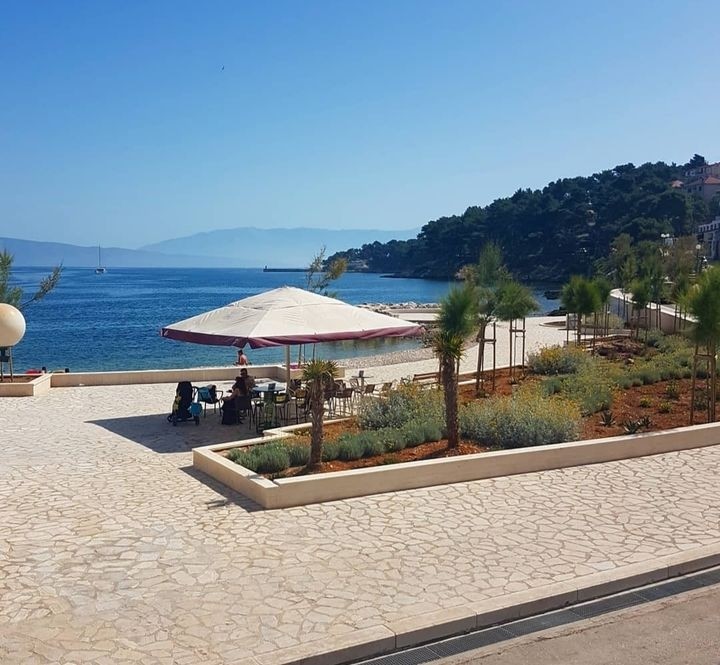
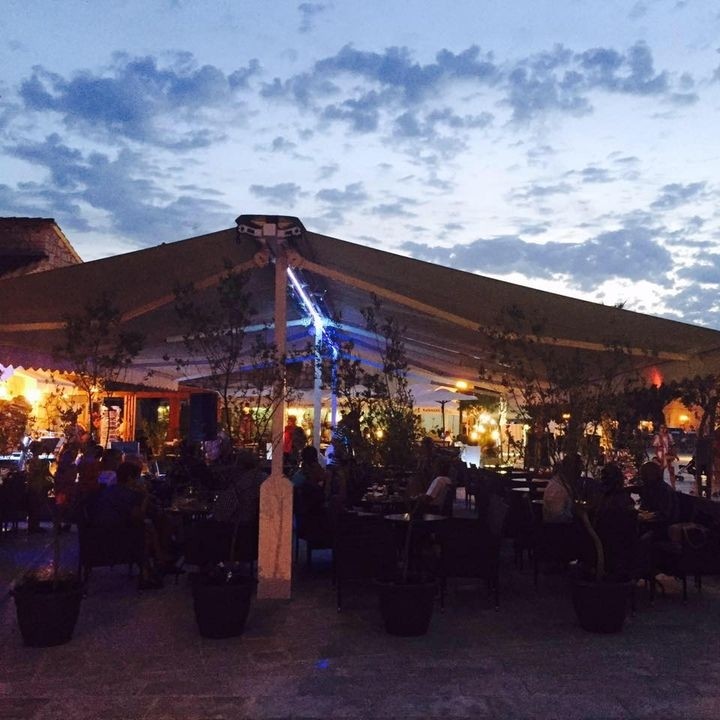
The harbour extends deep into the town and is almost entirely surrounded by a walkway. Along the seafront, there are terraces, restaurants, cafés, and moorings for boats, while within a few minutes' walk, you can reach all the important parts of old Jelsa.
One of the advantages of the town is its compactness. From the harbour, it’s a quick walk to Pjaca, the Church of the Assumption of Mary, St. John’s Square, and the town park, while in the opposite direction, the promenade continues towards the bathing areas and beaches.
In the evening, the promenade is the main place for a stroll, but the true essence of Jelsa begins as soon as you step away from the sea and into the old stone houses.
The Square of the Croatian National Revival, simply known as Pjaca, is the main square of Jelsa and one of the places you are almost certain to pass through multiple times a day during your stay.
The square developed from the 16th to the early 20th century. On its western side, there is the Slatina spring, with water flowing through a small channel to the sea. In the centre of Pjaca stands a fountain erected in 1934.
Today, cafés, restaurants, shops, and patisseries surround the square, but Pjaca is not just a tourist space. It remains one of the main meeting points for the residents of Jelsa.
During the summer, concerts and larger events are held here, including the programme for the Jelsa Municipality Day and part of the renowned Wine Festival.
The most important sacred building in Jelsa is just a few steps from Pjaca.
The current parish church of the Assumption of Mary is mentioned in the Hvar Statute from 1331. Due to the threat of Ottoman attacks, the church was transformed into a small fortress in the 16th century, giving it an appearance rarely seen in Dalmatian parish churches.
Inside, valuable works of art are preserved, and between the church and the defensive wall lies a Lapidarium with ancient and medieval stone finds.
In front of the church, there is also a monument to the cross-bearers of the Za križen procession, one of the most important traditions on the entire island.
Just a few minutes from the main square lies a very different Jelsa.
Small St. John’s Square is enclosed by old stone houses and is one of the most beautifully preserved environments of the old town core. At its centre stands a tiny octagonal church of St. John.
The square is particularly lovely in the evening when you step away from the busier promenade and Pjaca. Here, you can best see how Jelsa looked before the town expanded towards the coast.
For one of the best views of Jelsa, you need to venture a little away from the sea.
The Church of Our Lady of Health is located on a hill above the southern part of the town. A climb from the centre leads to it, and from the area around the church, there is a beautiful view over Jelsa, the harbour, and the northern side of the island.
From here, you can also continue along old paths into the interior. The area around Our Lady of Health is one of the starting points for hiking excursions towards Galešnik and the Tor tower.
Above Jelsa lie two very interesting historical sites.
Galešnik is a large late antique fortress with remnants of walls, internal rooms, and a cistern. Its elevated position allowed for monitoring the Hvar Channel and land routes through the central part of the island.
Tor is a different site – a stone tower built on an even older site, high above Jelsa.
Both locations are accessible on foot. The excursion is particularly pleasant in spring and autumn, while in the height of summer, it’s best to plan an early morning visit as the paths are largely exposed to the sun.
One of the greatest advantages of Jelsa is that for daily swimming, a car is often not necessary.
On both sides of the Jelsa bay, there are smaller bathing areas, rocky spots, and arranged sections of the coast that can be reached on foot from the centre. For a longer stay by the sea, the most well-known choice is Mina.
Mina is located about a kilometre from the centre of Jelsa and is particularly popular among families with children. The cove is shallow, the sea gradually deepens, and the beach and seabed have plenty of sand.
There are arranged sunbathing areas, showers, the option to rent sun loungers, and catering facilities, while large pine trees in certain areas provide natural shade.
About two kilometres east of Jelsa lies Grebišće, one of the most popular beaches in this part of Hvar.
It is special for its shallow sea and sandy bottom, making it very suitable for children. It can be reached by car, bicycle, or via a pleasant coastal route from Jelsa.
On the opposite side of the town towards Vrboska lies Vitarnja, with a series of smaller bathing spots along the coast.
East of Jelsa, Zenčišća and other smaller coves follow. Zenčišća features pebbly sections of the coast, a concrete pier, and road access.
Those with a car can continue further to numerous coves on the northern coast or head through Pitve towards the beaches on the southern side of Hvar.
One of the best reasons to choose Jelsa as a base is its close proximity to the old villages in the interior.
Pitve is located above Jelsa, at the start of the road leading to the tunnel that goes to the southern coast. The village has preserved its stone houses, narrow passages, and one of the most beautiful positions overlooking the Jelsa field.
Vrisnik and Svirče are further inland and are strongly connected to viticulture. It is through these villages that one can best see the other side of Hvar – the one without large hotels and beach crowds, featuring vineyards, olive groves, old churches, and taverns.
A visit to all three villages can be accomplished in just a few hours, and they are only a short drive from Jelsa.
For a completely different excursion, it is worth heading east from Jelsa towards Humac.
The Ethno-Eco Village of Humac has preserved an exceptionally valuable complex of old stone houses, courtyards, cisterns, and agricultural buildings. It was once seasonally used by the residents of Vrisnik who came here to cultivate distant fields and tend to livestock.
Nearby is Grapčeva Cave, one of the most important prehistoric sites on Hvar. Visits to the cave are organised and guided, so it’s advisable to check the options and visiting times before going.
Humac and Grapčeva Cave together make for one of the best half-day trips from Jelsa.
It is difficult to understand Jelsa without wine.
Behind the town begins the area of Pitve, Vrisnik, Svirče, and other old wine-growing settlements, while over the hills towards the southern coast lie some of the most renowned wine-growing locations on Hvar.
Viticulture has shaped the economy and appearance of this part of the island for centuries. Stone terraces, field paths, and villages in the interior have largely arisen due to agricultural practices.
Today, there are several wineries in Jelsa and the surrounding villages, and local wines can be tasted in restaurants, taverns, and wine cellars.
The biggest celebration of this tradition is the Wine Festival, held at the end of summer and one of the most well-known events in Jelsa.
The gastronomy of Jelsa is based on the classic cuisine of Hvar and central Dalmatia: fish, olive oil, vegetables, simple dishes from taverns, and local wine.
One of the most famous dishes from Hvar is gregada, a simple fish dish traditionally prepared with fish, potatoes, onions, olive oil, and wine.
Jelsa offers a wide selection of restaurants, taverns, pizzerias, bars, and places for breakfast and coffee, while for a more authentic experience, it is worth venturing a few kilometres inland towards Pitve, Vrisnik, and Svirče.
The most important traditional event is not a summer festival, but the Za križen procession.
On the night of Maundy Thursday to Good Friday, six processions set off simultaneously from Jelsa, Pitve, Vrisnik, Svirče, Vrbanja, and Vrboska. Each one visits the other five places and returns to its starting point after approximately 25 kilometres.
This tradition has lasted for centuries and is included in UNESCO’s Representative List of the Intangible Cultural Heritage of Humanity.
For visitors, the morning return of the Jelsa cross-bearer after an all-night journey is particularly impressive.
During the summer, Jelsa regularly hosts concerts, gastronomic programmes, and traditional festivals.
The most famous is the Wine Festival, which dates back to 1952. Today, it brings together Hvar winemakers, gastronomic offerings, concerts, and traditional competitions.
At the beginning of summer, the Wine, Olive & Heritage Festival is held, dedicated to Hvar wines, olive oil, gastronomy, and local producers.
A major celebration also takes place on 15 August, when both the Assumption of Mary and Jelsa Municipality Day are celebrated simultaneously.
Jelsa is very practical for a family holiday.
The centre is compact, and a large part of daily needs can be met on foot. Mina and Grebišće are particularly suitable for children due to their shallow waters, and the long promenades along the coast allow for walks without the need for a car.
The town park provides plenty of shade, while shops, restaurants, patisseries, and other amenities are concentrated around the centre.
For families wishing to combine beach time with shorter excursions, the distances to Pitve, Vrboska, Stari Grad, and other places are also very convenient.
July and August offer the most events and the liveliest atmosphere, but they also see the highest number of visitors.
June and September are more pleasant for many. The sea is suitable for swimming, restaurants and most tourist facilities are open, and the temperatures are better for exploring villages, cycling, and hiking.
Spring and autumn are excellent for those coming primarily for walking, cycling, wine, and exploring the island.
In winter, Jelsa is much quieter, and it’s the best time to see how the town functions without the tourist season, but one should expect a significantly reduced number of open tourist facilities.
The main ferry port for arriving by car is in Stari Grad, about 9 kilometres from Jelsa. A good asphalt road leads from the port to the town.
Jelsa is approximately 28 kilometres by road from the town of Hvar and about 51 kilometres from Sućuraj at the eastern end of the island.
There are also passenger catamaran connections that include Jelsa, but routes and schedules may change according to the season, so it’s advisable to check the timetable before travelling.
For exploring Jelsa itself, a car is not necessary. However, if planning to visit the southern coast, Humac, more distant coves, and villages in the interior, a car or other means of transport greatly facilitates the stay.
Jelsa has public parking areas near the centre. Parking in the central area is charged, and prices and payment regimes may vary, especially between the summer and winter periods.
In July and August, it’s wise to expect higher demand for spaces, particularly in the evenings and during major events.
After parking, a car is generally not needed for exploring the centre: the promenade, Pjaca, St. John’s Square, the parish church, the park, and a large part of the bathing areas are within walking distance.
Jelsa may not have the monumentality of the town of Hvar or the ancient weight of Stari Grad, but its balance is its greatest advantage.
It is large enough to offer restaurants, shops, beaches, nightlife, and everything needed for a pleasant holiday, yet small enough to be walkable almost everywhere.
The sea is right by the town, sandy beaches are nearby, old villages begin just a few kilometres away, vineyards practically behind the last houses, and the rest of Hvar is easily accessible by road.
For a guest wishing to experience more than one side of the island while having a pleasant place for evening strolls and daily swimming without constantly getting into a car, Jelsa is one of the best bases on Hvar.


Travelers You have visited an interesting restaurant, bar, attraction, event ? Share your positive experiences ! Write an article, post a video or photos you've taken.