Vela Straža on Šolta – the highest peak of the island and viewpoint above Gornje Selo
Vela Straža is situated above Gornje Selo, on the eastern part of Šolta, and at 237 metres, it is the highest peak of the island. While it is not a particularly high or demanding hike, it offers one of the best vantage points for views of eastern Šolta, Stomorska, the Split Channel, and the neighbouring island of Brač.
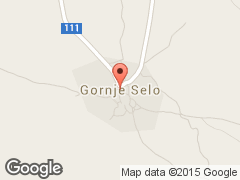
The most common route to the summit begins in Gornje Selo, passing through the sanctuary of Our Lady of Stomorja. From the village, expect a leisurely walk of approximately half an hour to 40 minutes, with just a further ten minutes of ascent from the church to the peak itself.
We find Vela Straža most beautiful early in the morning or in the evening. At these times, the sun is not too strong, the air is clearer, and the surrounding islands and sea passages are easier to discern from the summit.
The view from the highest peak of Šolta
Although it stands at only 237 metres, Vela Straža offers a wide-ranging view due to its position above the steep slopes of the eastern part of the island.
To the east, one can see the Split Channel, the waterway between Šolta and Brač. Beyond that, the view opens up towards Brač, while to the south, the open sea and part of Šolta's rugged southern coastline are visible.
To the north, the view extends towards Stomorska, Nečujam, and the mainland, and on clear days, visibility reaches much further towards the central Dalmatian islands.
There is no designated platform with railings or a tourist telescope at the summit. The view is accessible from the rocky terrain around the cross, so caution is advised while walking, especially when the stones are wet or in strong winds.
Why is it called Vela Straža?
The name Vela Straža literally means 'great watch' or 'large observation point'. The peak's location allowed for monitoring maritime routes around the eastern part of Šolta and the passage to Brač.
Such elevations were significant long before modern roads and communications. From these heights, one could spot the arrival of ships, potential dangers from the sea, or movement along the island's coastline.
At Vela Straža, there is also a prehistoric site, a large stone mound associated with the Illyrian period. It is not currently developed as an archaeological park, so some visitors may pass by without realising that the stones at the summit are not merely a natural formation.
The stones must not be moved, removed, or stacked into new mounds. Walking on top of the ancient structures can also damage the site.
The large stone cross
The most recognisable feature at the summit is the large stone cross set on a stone pedestal. It was erected in 1925 to commemorate the thousandth anniversary of the Croatian Kingdom and King Tomislav.
The cross was restored in 1993 and now serves as the main landmark at the summit. Next to it are the elevation marker and a hiking stamp.
Due to the cross, Vela Straža is not only a viewpoint and hiking point but is also locally associated with religious gatherings, particularly the Stations of the Cross that take place from the sanctuary of Our Lady of Stomorja to the summit.
How to get there from Gornje Selo
The most common starting point for the walk is Gornje Selo. From the parish church of St. John the Baptist, follow the road towards Stomorska, then turn towards the sanctuary of Our Lady of Stomorja.
The path to the sanctuary is mostly well-maintained and partially asphalted. After the church, it continues along a wider gravel path that gradually ascends towards the cross.
From the centre of Gornje Selo to the summit, expect approximately 35 minutes of walking at a normal pace. The time may vary depending on the starting point, the heat, and any stops at the church.
The trail is not technically demanding and does not involve climbing over rocks. However, the final section is rocky, and there are some loose gravel areas, so trainers or lightweight hiking shoes are a better choice than flip-flops.
A shorter option from Our Lady of Stomorja
It is possible to drive to the sanctuary of Our Lady of Stomorja and then continue on foot to the summit.
From the area near the church to the cross, there is a short ascent along a wide gravel path. Depending on your pace, this takes about five to ten minutes.
This option suits visitors who do not wish to walk the entire way from Gornje Selo but still want to experience the summit and the view.
There is limited space for a few cars near the sanctuary, but do not expect a large, organised car park. During mass, pilgrimages, and the Feast of the Assumption, the area can be quite full.
Cars must not be left in front of the cemetery entrance, on the path to the summit, or in places needed for turning other vehicles around.
Can you drive to the summit?
The gravel road leads very close to the summit, but it is not advisable to continue by car unnecessarily. The road is primarily suitable for pedestrians, cyclists, and official vehicles, and the ability to turn around and pass is limited.
It is best to leave the car at the sanctuary and walk the last part. The walk is short, and this helps avoid damaging the road, creating dust, and disturbing other visitors.
Camper vans and larger vehicles are not practical either at the church approach or on the final gravel section.
Cycling to Vela Straža
Vela Straža is part of the island's cycling routes through eastern Šolta. The access combines asphalt, gravel, and several ascents, making it more suitable for mountain, trekking, or electric bikes than for road bikes with very narrow tyres.
The final ascent is not long, but the surface can be loose. When descending, it is advisable to ride slowly due to stones, pedestrians, and potential vehicles coming from the opposite direction.
In summer, it is best to set off early as there is not much shade on the open sections of the path.
Stations of the Cross on Good Friday
A traditional Stations of the Cross takes place from the sanctuary of Our Lady of Stomorja to Vela Straža. It involves participants from Gornje Selo and other places on Šolta.
The Stations of the Cross are located along the path to the summit, connecting the church and Vela Straža into a single religious whole.
Visitors who find themselves on the path during the procession should respect the solemnity of the gathering, refrain from cycling through the group, and avoid photographing participants without permission.
When is the best time to visit Vela Straža?
Spring and early autumn are the best times for walking. The temperatures are more pleasant, the vegetation is greener, and visibility is often better than during the summer haze.
In summer, it is advisable to set off early in the morning or in the evening. Much of the final ascent lacks complete shade, and the stones heat up quickly.
In strong winds, it can be uncomfortable and much colder at the summit than in Gornje Selo or Stomorska. It is wise to bring a light jacket outside of summer and to keep away from steep edges.
After rain, the stones and ground can be slippery. Although the trail is short, it is advisable to walk more slowly in such conditions.
What to bring
For a short excursion, it is sufficient to bring:
- water
- sun protection
- sturdy footwear
- a hat or cap
- a mobile phone with a charged battery
- a light jacket if it’s windy
There are no kiosks, restaurants, toilets, or sources of drinking water at the summit. The nearest supplies can be found in Gornje Selo or Stomorska.
Visiting with children
Vela Straža can be a good short trip for families with children who can walk independently on gravel and rocky paths.
The trail from Our Lady of Stomorja is not long, but there are no protective railings at the summit. Children should be kept close, especially near rocky edges and in strong winds.
Pushchairs are not practical on the final gravel section. For very young children, a carrier is a better option.
Access may be challenging for those with reduced mobility due to the uneven terrain and final ascent.
What to visit nearby
A trip to Vela Straža is best combined with a visit to the church of Our Lady of Stomorja, also known as Our Lady in the Pines. The sanctuary is located just below the summit and is surrounded by a pine forest and an old cemetery.
In Gornje Selo, it is worth visiting the parish church of St. John the Baptist, strolling through the old stone core, or having lunch or dinner at Konoba Štandarac.
After the walk, you can descend towards Stomorska, where there are a waterfront, restaurants, cafés, and beaches.
Why visit Vela Straža?
Vela Straža is not a demanding hiking peak, but it offers much for relatively little walking. In one short excursion, you can experience nature, a view of the sea, a prehistoric site, a stone cross, and an old Marian sanctuary.
It will particularly appeal to visitors who wish to see Šolta from a different perspective. From the summit, the island's position between the mainland, Brač, and the open sea becomes clear, as does the importance of a location from which maritime routes have been monitored for centuries.
A basic visit can be completed in about an hour if starting from Our Lady of Stomorja, or slightly longer if departing from the centre of Gornje Selo and stopping for photographs along the way.


Vela Straža / Comments
Looks like you are not signed in!
How would you like to proceed?
Anonymous comment
Login
Register
Your comment was submitted successfully and it will be published after approval by administrator!
General Conditions of Publiciation
General terms and conditions and notes
1. Web page
Web page www.holiday-link.com is an interactive web page where the visitors can put texts, news, photos and video movies regarding the content about tourism, gastronomy, culture and entertainment. Information can be uploaded by the owners, managers, employees, tourist boards, residents and tourists, basically all those who want to introduce the public to the specific content (facilities). The site allows evaluation of the attractiveness of a specific content and it allows writing comments by other visitors. Visitors, who log in and want to publish an information about some content (facility) or promote some tourist service, become users or suppliers and they agree to the general terms and conditions that are stipulated here and are obliged to act in accordance with the general terms and conditions (general conditions do not apply if a person is only visiting the page). A person can become a user by signing up with a user name and a password. The user agrees to put the accurate access data, name and surname and the address. Contents that users publish will be signed with a nickname they choose, while the personal data will be used in accordance with the privacy statement. Persons under the age of thirteen are not allowed to enter any content. General terms can be changed from time to time and if the user or supplier doesn’t agree with the changed general terms and conditions he can remove his content from the site.
2. Content
The page is not the media that publishes editorial program contents but the page where the visitors publish information that serve for the educational and cultural public informing about the touristic, cultural and gastronomic contents (facilities). The goal of the site is to collect the information that will give the tourists, as well as the locals, the insight into touristic, cultural and gastronomic offer of the certain location (city, region and country). Publishing the information about the content (information on facilities) is completely free of charge. Except the touristic content , on these pages, providers of various services in tourism may publish and advertise services they offer. These are, further in the text, referred to as a suppliers. Users and suppliers are solely responsible for the publication of their contents in accordance with the statement of responsibility.
3. User obligations
Each user is obliged to use the website in accordance with the general terms and conditions. By publishing the certain text, comment, photo or video movie on the site, the user guarantees that the published information are true, and that they are not copyrighted by a third party. Each user is morally and materially responsible for the publication of content. It is forbidden to copy texts from other websites. Administrators review entered contents and approve them for publishing. Holiday-Link.com has the right not to show the content it finds inappropriate, untrue or offensive. The owners, managers or employees of the gastronomic facilities (eg. restaurants) have the right to reply to the articles and comments on their own content. The owners have the right to request the removal of the text regarding their facilities if they find it inappropriate. The complaint can be send to complain@holiday-link.com. By publishing the content, the user is giving the exclusive, royalty-free, perpetual transferable, irrevocable and fully sublicensable licence (copyright) to use, reproduce modify, adapt, translate, distribute, publish and publicly display subscribed content to the Holiday-Link.com and its affiliates.
4. The obligations of suppliers of tourist services (accommodation and other services)
Company Holiday-Link.com Ltd acts as advertising website on this website and not as a tour operator or intermediary travel agency. Suppliers of tourist services who register their capacity on this site, pay the commercial advertising model they choose. Interaction, regarding arranging a specific accommodation or other tourist service, is done directly between supplier and visitor. Visitors arrange the accommodation or some other touristic service directly with the suppliers and pay the arranged service to them. Suppliers are responsible for all entered data, images, prices and more. Suppliers guarantee that they have all licences necessary to carry out the services they offer, and to operate in accordance with the laws of their home country. By purchasing certain service, visitor accepts the terms and conditions of a supplier from whom he purchased the service. Holiday-Link will check each supplier before putting its facilities to be visible on the page.
5. Statement of Responsibility
The information, that users and suppliers are entering, can be wrong. Holiday-Link.com does not check the entry of the information, pictures and movies and cannot guarantee their accuracy and it disclaims any responsibility for any incorrect data. If you notice a certain misstatement, inaccuracy or inadequacy in any content, please contact us by e-mail: complain@holiday-link.com The responsibility, for every information about some content, is on the user who entered the information. Suppliers, who advertise touristic services via this website, act as independent entrepreneurs. They enter the data about their services , as well as the pictures and the prices, on their own. Holiday-Link.com does not check entered data and disclaims responsibility regarding the errors that can occur during the entering. Suppliers have to own all the licences regarding the services they offer, and they have to respect the laws and regulations of the home country. Visitor arranges the specific service directly with the supplier, on the basis of data that is entered by a supplier as independent entrepreneur, and he pays it directly to the supplier. Therefore, Holiday-Link.com disclaims responsibility for any problem related to the certain reservation.
6. Privacy Policy
When logging into the website, users and suppliers have to enter some personal data (name and surname, e-mail, address, phone number, etc.). Holiday-Link.com guarantees that this data will be kept secret and will not be forwarded to the third parties. Holiday-Link.com can use an user and a supplier e-mail for sending necessarry informaion and for advertising.
7. Cookie Policy
Cookies are small text files that can be stored into device of a visitor if it is allowed by a web browser. Holiday-Link.com uses cookies to provide a better user experience on the website for the visitors. Also, while visiting Holiday-Link.com, you can automatically collect a certain data.
8. Court Jurisdiction
In case of any dispute, related to the site holiday-link.com, the court in Split and the Croatian law are competent.