
Must visit(/)
Visit(/)
Skip(/)
Vrboska, Hvar – beaches, attractions and complete guide
| Tourist guide Vrboska | Tourist facilities |
Vrboska – The Little Venice of Hvar, a place of bridges, fishing tradition and hidden coves
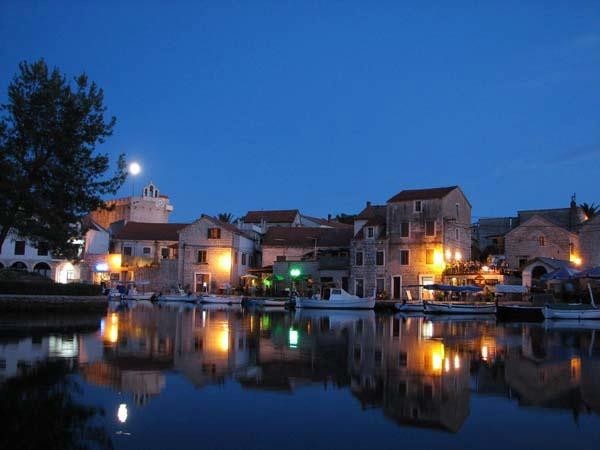
Vrboska is one of those places on Hvar that reveals itself gradually. Located on the northern side of the island, it sits deep in a long, narrow bay that transforms into a canal between old stone houses as it approaches the centre. Small bridges span the water, boats are moored almost at the doorsteps, and in the middle of the bay lies the tiny islet of Škojić. This unusual layout has earned Vrboska the nickname Mala Venecija (Little Venice).
However, Vrboska is not interesting solely because of its bridges. Behind today’s tranquil summer atmosphere lies a rich fishing history, one of the most unusual fortified churches in Dalmatia, an exceptionally valuable collection of sacred art, the first Fishing Museum of its kind on the Adriatic, a protected harbour, a good gastronomic scene, and a range of natural beaches that stretch around the green peninsula of Glavica.
Vrboska is small enough to explore the centre on foot, yet it offers enough activities for several days of relaxation without the need to constantly venture to other places on Hvar.
A small place at the end of a long bay
Vrboska developed at the end of a very deep and winding sea inlet. Approaching from the sea, one sails for a long time between green shores before the first houses and marina appear, and then the bay gradually narrows towards the historical centre.
The town is traditionally divided into two parts. Pjaca, on the eastern side, features more Renaissance and Baroque houses, while on the western side lies Podva, with churches, narrow streets, and Gothic and Renaissance homes.
Today, this division is of little importance to tourists, as it takes only a few minutes to cross from one side to the other. The bridges connecting the two shores have become the most recognisable motif of Vrboska.
According to the 2021 Census, Vrboska has around 550 inhabitants, so despite its summer liveliness, it remains a small place where the same streets, terraces, and people are quickly recognised.
Why is Vrboska called Little Venice?
The nickname does not stem from Vrboska trying to resemble Venice, but rather from the very unusual relationship between the houses, the sea, and the bridges.
The sea penetrates deep into the heart of the town, transforming into a narrow canal. Small stone houses stand on either side, and picturesque bridges of various shapes and periods connect the shores.
In the middle of the bay is the small islet of Škojić, one of the visual symbols of Vrboska. In summer, the area around it and the bridges is occasionally used as a backdrop for cultural events.
The most beautiful way to get to know Vrboska is not to follow a predetermined route. It is enough to walk along one side of the promenade, cross one of the bridges, lose oneself for a few minutes in the stone streets, and then return to the sea on the other side.
A fishing village born from sardines
Today’s Vrboska began to develop more seriously in the 15th century, when residents from nearby Vrbanja and other places began to descend towards the sea.
The main reason was the sardine.
The development of fishing techniques allowed for more intensive catches of small blue fish, making it important for inland residents to have a safe harbour close to fishing areas. Thus, a fishing settlement gradually formed around the protected bay.
For centuries, fishing has determined the life of Vrboska. Boats, nets, fish processing, and trade brought enough wealth to the town to build quality stone houses, churches, and commission artworks from renowned masters.
This past has not disappeared. It is best understood at the Fishing Museum, but can also be seen today in the old wooden boats, restaurant menus, and events dedicated to traditional vessels.
The Church-Fortress of St. Mary of Mercy – the symbol of Vrboska
The most important historical building in Vrboska is located just a few minutes above the waterfront.
The Church-Fortress of St. Mary of Mercy resembles more of a small fortress than a classic Dalmatian church. This is due to the Ottoman attack on Hvar in 1571, during which Vrboska was also affected.
Afterwards, the church was expanded and fortified in 1575 so that it could serve as a refuge and defensive point for the population in case of another attack.
The massive stone walls, defensive elements, and elevated position make it completely different from other churches in the town. When open to visitors, it is worth exploring both the interior and the various parts of the fortress.
If you only have time for one historical site in Vrboska, this is the one not to be missed.
The Church of St. Lawrence – the greatest artistic surprise
Just a few minutes away is the parish Church of St. Lawrence, the patron saint of Vrboska.
From the outside, it is much calmer and simpler than the church-fortress, but the interior houses an exceptionally valuable collection of sacred art. Among the works, those associated with Paolo Veronese, Leandro Bassano, and other Renaissance and Baroque masters, as well as Croatian painters Celestino Medović and Marko Rašica, stand out.
Some valuable artworks from the church-fortress have also been relocated to the Church of St. Lawrence due to unfavourable conditions for their preservation.
Thus, these two churches should be viewed together: St. Mary best illustrates the defensive history of Vrboska, while St. Lawrence showcases its artistic and religious heritage.
The Church of St. Peter – older than Vrboska itself
At the entrance to the harbour is the small Church of St. Peter.
It is easy to overlook as it lacks monumental dimensions, but it is mentioned as far back as 1331, at a time when today’s Vrboska did not yet exist as a developed settlement.
The original statue of St. Peter, a work by Nikola Firentinac, is now kept in the Church of St. Lawrence, while a copy is located by the chapel.
A visit takes only about ten minutes, but its age gives it a special place in the story of Vrboska.
The Fishing Museum – a story of life before tourism
The Fishing Museum is one of the most important stops for anyone wanting to understand why Vrboska looks the way it does.
Opened in 1972, it was the first museum of its kind on the Adriatic coast. A large portion of the exhibits were donated by local fishing families.
The collection includes old nets, hooks, longlines, lights used for night fishing, tools for repairing nets and sails, items from fishing households, and exhibits related to sardine processing.
Particularly interesting is the story of a former sardine factory that operated until 1972.
The museum is not large, but this makes it possible to visit it peacefully in half an hour, after which one can view the old boats moored along the waterfront from a different perspective.
Walking along the promenade, bridges and old town
The majority of Vrboska’s charm is free and requires no planning.
In the morning, it is best to stroll along the promenade while the town is still waking up. The water in the canal is often almost calm at this time, allowing the stone houses and bridges to reflect on the surface.
In the evening, the same route looks completely different. Restaurants and bars open, boats return to the harbour, and the bridges and Škojić become one of the main spots for an evening stroll.
Vrboska is not a place to rush from one attraction to another. It is best enjoyed when time is allowed for a few spontaneous stops by the sea.
Soline Beach – the most practical for families
If you are looking for a well-maintained beach where you can spend the whole day, Soline is the simplest choice.
Located about a kilometre from the centre of Vrboska, at the beginning of the Glavica peninsula, the main part of the beach is pebbly, with easy access to the sea, and the pines behind the shore provide plenty of natural shade.
Nearby are a restaurant, beach bar, and seasonal water activities, and during the summer, there is also an aquapark. Showers and changing cabins are available.
Soline can be reached by car, bicycle, or on foot along the coast. There is a designated parking area by the beach, which is chargeable during the tourist season.
For families with young children, this is the most practical beach in the Vrboska area.
Glavica – for those seeking their own piece of coast
From Soline, the green peninsula Glavica continues, covered in pines and dotted with paths leading to natural swimming spots.
Here begins a completely different Vrboska.
Instead of a single well-maintained beach, there are small coves, rocky shores, and flat stone slabs. Paklena, Kamenjara, Balun, and other swimming spots cater to guests who value peace and nature over showers, bars, and sun loungers.
Balun is particularly known for its naturist tradition and large stone areas for sunbathing.
The peninsula is pleasant even out of season, becoming an area for walking and cycling through the pine forest.
Maslinica – a natural cove without tourist infrastructure
On the other side of Vrboska lies Maslinica, completely different from Soline.
This is a natural, predominantly rocky and stony cove with pines around the shore and very clear water. In some places, there are more accessible entries into the water, but this is not a classic wide pebbly beach.
There are no beach bars, showers, or organised sun loungers, making it best for guests who seek tranquillity and are prepared to bring everything they need for a few hours by the sea.
Milna – a small cove in the shade
Between Vrboska and Jelsa lies the small cove of Milna, approximately 1.5 kilometres from the centre of Vrboska.
The shore is small and natural, with rocky and stony sections, while the pines provide plenty of shade. The water is clear, and the middle of the cove has lighter and finer parts of the seabed that give beautiful turquoise hues.
Milna is not a beach with much infrastructure. It is best suited for peaceful swimming and a few hours in the shade.
Zečevo Island – a small boat trip from Vrboska
One of the best day trips from Vrboska is the islet of Zečevo, located about a kilometre away in a straight line from the town.
It cannot be reached by car or on foot – access is by taxi boat or private vessel.
For decades, Zečevo has been known as a naturist destination, although it is not exclusively nudist today. The majority of the coastline consists of natural rocks and stone slabs, with dense pines providing ample shade.
On the islet, there is also Lantina Beach, a well-equipped beach bar and restaurant with sun loungers and cabanas.
Those seeking a completely natural experience can move away from the bar and find a quieter part of the coast.
Water for swimming and exploring the underwater world
Much of the coastline around Vrboska is rocky, which has one significant advantage – the water remains very clear.
At Glavica, Maslinica, and Zečevo, the rocky seabed, crevices, and transitions to greater depths create good conditions for snorkelling.
For rockier beaches, water shoes are useful, especially due to sea urchins and uneven entries.
ACI Marina Vrboska – one of the greatest advantages for sailors
The long and sheltered bay has naturally made Vrboska an important nautical destination.
In the outer part of the harbour is the ACI Marina Vrboska, open year-round. It currently has 116 berths in the sea and 12 dry berths, and can accommodate vessels up to 35 metres at daily berths.
The marina offers water and electricity at the berths, sanitary facilities, a laundry, Wi-Fi, a crane, and other amenities necessary for sailors, while there is also a petrol station in the harbour area.
The greatest advantage is its location: boats are safely moored in a protected bay, and the centre of Vrboska and its restaurants can be reached on foot.
Where to eat in Vrboska?
The fishing history of the town is still best felt at the table.
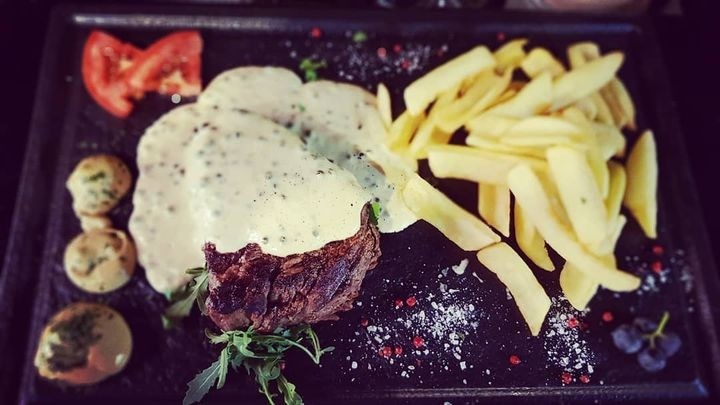
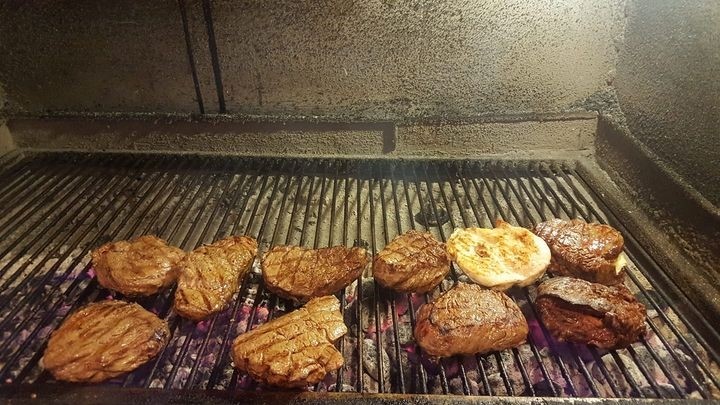
Vrboska offers a surprisingly large selection of restaurants for such a small place. Alongside fresh fish and seafood, one can find gregada, brujet, black risotto, octopus, lobster, prawns, peka, and grilled meat.
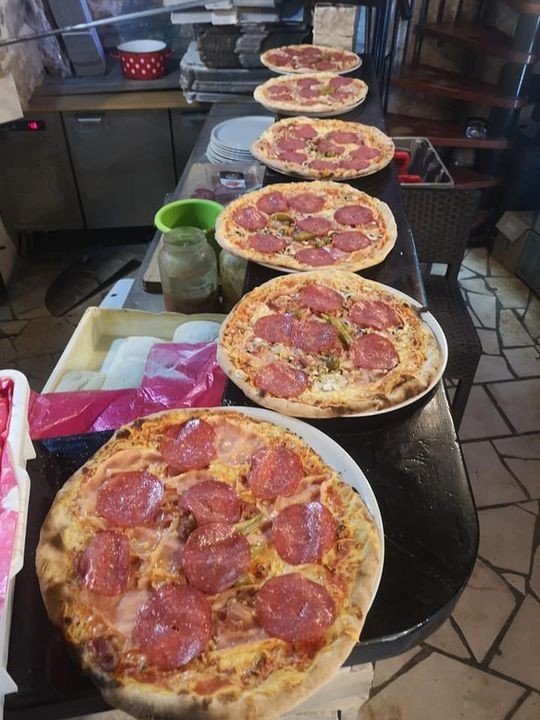
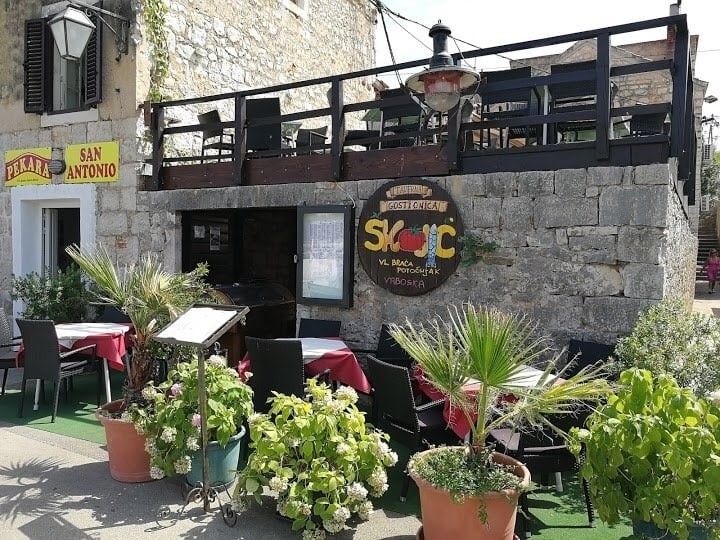
Bonaca is interesting for more traditional fish dishes like gregada and brujet, Trica Gardelin and Luka Gardelin for fish and seafood by the sea, Lem for a wider selection of Dalmatian dishes and pizza, and Ruzmarin for fish platters, grill, and pizza.
GOTA combines pizza, fish, seafood, and a more relaxed dinner by the harbour, while Ranč Gabelić offers a completely different experience outside the waterfront, with peka and local products in a natural setting.
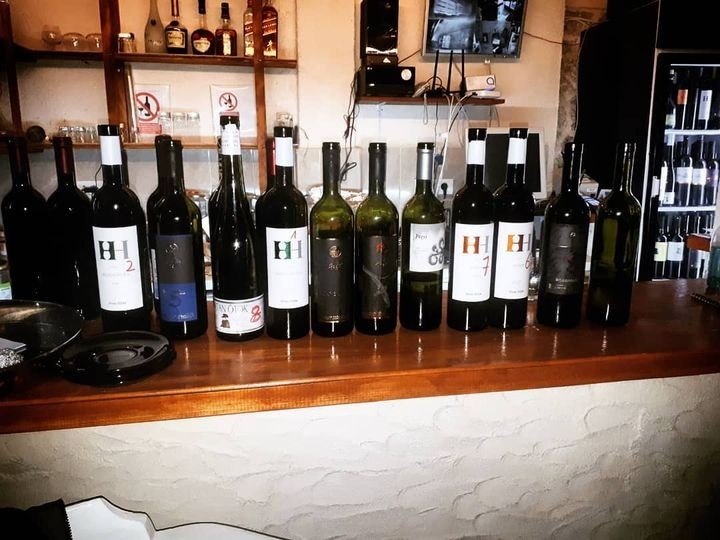
For wine and local delicacies, Pinjata and Konoba Nikola are particularly interesting, focusing on Hvar varieties, homemade wine, and brandies.
Coffee, ice cream, and evening drinks
Vrboska is not a place of vibrant nightlife like the town of Hvar, and this is one of the reasons many choose it.
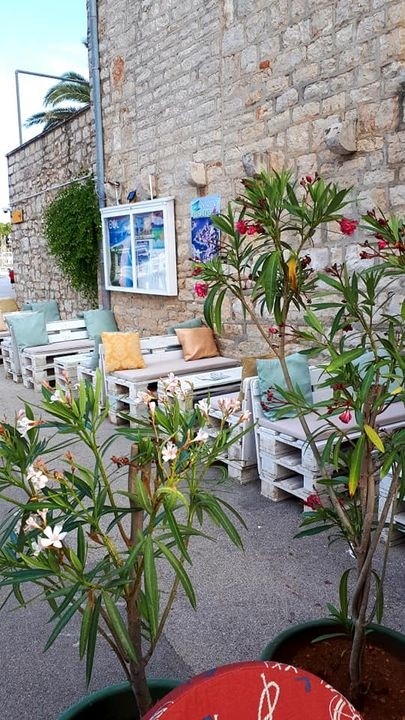
The day can start with coffee or breakfast by the harbour at Gira, during a walk, stop for ice cream at Gelaterija Lavanda, and in the evening, sit down for wine, beer, or a cocktail on one of the terraces by the promenade.
Paparazzi is a simple café bar on Nova Riva, while for a later night out away from the centre, there is Luda Koka, about 1.5 kilometres from the main waterfront.
Most evenings, however, take place by the sea – on restaurant terraces, bridges, and during a leisurely stroll around the harbour.
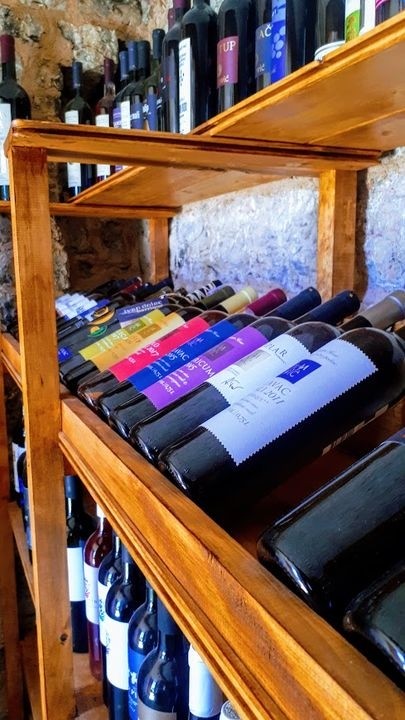
Hvar wines – Bogdanuša, Parč, and Plavac Mali
The area around Vrboska immediately transitions into the wine-growing region of central Hvar, making wine a natural part of the gastronomic offer.
It is worth tasting Bogdanuša, an indigenous white variety particularly associated with Hvar, as well as the much rarer Parč.
For lovers of red wines, there is Plavac Mali, the most famous Dalmatian red variety.
The most interesting wines are best tasted in smaller cellars and wine bars, where they can be paired with cheese, prosciutto, salted fish, and olive oil.
The Procession of Za Križen
Vrboska is one of six places involved in the centuries-old procession Za Križen, which takes place on the night from Maundy Thursday to Good Friday.
Simultaneously from Vrboska, Jelsa, Pitava, Vrisnik, Svirče, and Vrbanja, six processions set off, circling throughout the night and returning to their starting point in the morning.
This tradition is inscribed on UNESCO’s Representative List of the Intangible Cultural Heritage of Humanity.
For Vrboska, it is one of the most important events of the year and offers a completely different experience of the town compared to summer festivities.
The Feast of St. Lawrence – the most important summer day in Vrboska
10th August is celebrated as St. Lawrence’s Day, the patron saint of Vrboska.
The day includes a ceremonial religious programme and procession, and in the evening, the town centre transforms into a large summer festival with music, food, drinks, and socialising.
If you want to see Vrboska at its liveliest, this is one of the best days to visit.
St. Peter's Days and traditional boats
At the end of June, Vrboska celebrates St. Peter's Days.
Particularly interesting is the regatta of traditional wooden boats with Latin sails. Alongside this, there are blessings of the boats, balote, and evening gatherings.
This is one of the events that best showcases Vrboska’s connection to fishing and the old maritime way of life.
The Crazy Vessel Race
The Crazy Vessel Race has a completely different character and takes place during the summer.
Teams create improvised and as creative vessels as possible, which then navigate through the canal, under the bridges, and around Škojić.
Here, the most important thing is not who will be the fastest, but whose construction and performance will be the most imaginative.
For spectators, especially children, this is one of the most entertaining events in Vrboska.
Vrboska for families with children
Vrboska is a very good choice for a family holiday.
The centre is small, most daily amenities are accessible on foot, and traffic in the old town does not dictate the atmosphere of the place. Soline offers a practical family beach, while for quieter swimming, there are numerous coves to choose from.
Children will find the bridges, boats, Škojić, the Fishing Museum, and the taxi boat to Zečevo particularly interesting.
For families wanting evening strolls and restaurants without intense nightlife, Vrboska is more pleasant than many larger tourist centres.
Walking and cycling
Vrboska is not only interesting in summer.
The Glavica peninsula is excellent for walking through the pine forest, and towards the interior of the island, cycling and walking routes open up towards Starogradsko polje, a UNESCO-protected cultural landscape.
In spring and autumn, when temperatures are not high, cycling is one of the best ways to explore the area between Vrboska, Jelsa, Vrbanja, and Stari Grad.
How to get to Vrboska?
Vrboska is located on the northern side of the central part of Hvar Island.
If you are arriving in Hvar by car via ferry from Split, you will most likely disembark at the ferry port of Stari Grad, which is about 8 kilometres from Vrboska.
Jelsa is about 5 kilometres away and can be reached quickly by car, bicycle, or a longer walk along the coast.
From the main island road D116, a local road branches off towards Vrboska, which ends in the town after a few kilometres.
Vrboska can also be reached by bus or taxi from other parts of Hvar.
Parking in Vrboska
A car is not necessary for exploring the centre.
The most practical option is to leave your vehicle in one of the public parking areas in the wider centre and explore the rest of the town on foot. In July and August, the spaces closest to the waterfront can fill up quickly, especially in the evenings and during larger events.
The old town, churches, Fishing Museum, bridges, Škojić, restaurants, and bars are all located within a relatively small area.
There is a separate parking area for Soline by the beach, which is chargeable during the tourist season.
When is the best time to visit Vrboska?
June is excellent if you want warm water, long days, and fewer crowds than in the peak season. At the end of the month, St. Peter's Days are also held.
July and August bring the most activities, the warmest water, and the liveliest evenings. During this time, restaurants and beaches are the busiest, and the Feast of St. Lawrence and the Crazy Vessel Race take place.
September may be the best month for guests who value swimming and tranquillity over events. The water is still warm, and the number of visitors gradually decreases.
Spring and autumn are ideal for walking, cycling, Starogradsko polje, and exploring the town without the summer heat.
How many days to stay in Vrboska?
One day is sufficient for merely exploring the old town.
However, Vrboska makes more sense when not just used as a day trip stop. With one day for the town, one for the beaches of Glavica, and one for Zečevo or exploring the rest of Hvar, it is easy to arrange several days of relaxation without repeating the same itinerary.
For a week, Vrboska is a good base for exploring Jelsa, Starogradsko polje, Stari Grad, and other parts of central Hvar.
Why choose Vrboska?
Vrboska does not have the monumental squares of the town of Hvar or the bustling waterfront of larger island places.
Its advantage lies in its different rhythm.
In the morning, one can enjoy coffee by an almost tranquil canal, a few minutes later admire Renaissance art or fishing nets over a century old, spend the afternoon swimming in a cove under the pines, and in the evening cross a stone bridge for dinner by the sea.
Vrboska is organised enough to provide guests with everything they need, yet still small enough that the sea, fishing boats, stone houses, and pine forests remain more important than the tourist infrastructure itself.
Useful information
- Location: northern coast of Hvar Island, Municipality of Jelsa
- Population: around 550 according to the 2021 Census
- Nickname: Little Venice, due to the canal and small bridges
- Historical development: fishing settlement developed in the 15th century
- Parts of old Vrboska: Pjaca and Podva
- Most important landmark: Church-Fortress of St. Mary of Mercy
- Other landmarks: Church of St. Lawrence, Church of St. Peter, and Fishing Museum
- Most recognisable visual symbols: canal, stone bridges, and the islet of Škojić
- Most practical beach for families: Soline
- Natural beaches: Maslinica, Milna, Paklena, Kamenjara, Balun, and other coves around Vrboska
- Naturism: present at Balun and traditionally on the islet of Zečevo
- Boat trip: Zečevo, accessible by taxi boat or private vessel
- Naumatics: ACI Marina Vrboska is open year-round
- ACI Marina: 116 berths in the sea and 12 dry berths; daily acceptance of vessels up to 35 m
- Gastronomy: fresh fish, gregada, brujet, black risotto, octopus, peka, and Hvar wines
- Main wines worth tasting: Bogdanuša, Parč, and Plavac Mali
- Most important events: Za Križen, Feast of St. Lawrence, St. Peter's Days, and the Crazy Vessel Race
- Distance from Jelsa: about 5 km
- Distance from the ferry port of Stari Grad: about 8 km
- Parking: public parking is available in the wider centre; the old town is best explored on foot
- Best time for swimming: from June to September
- Best time for walking and cycling: spring, early summer, and autumn


Service information
- Timezone and time:
- Europe/Zagreb (05:22)
- Currency:
- Internet TLD:
- .hr
- Population:
- 540
- Altitude:
- 5 m
- Country code:
- +385
- Town code:
- 021
- Seas:
- Adriatic sea
- Languages spoken:
- Croatian
- Map position:
- 43.1809927, 16.6722435
Must visit
Public transport
Transportation stations (in range of 20 km)
- Plane:
- Brac Airport
- Port:
- Jelsa, Stari Grad, Bol, Hvar, Sumartin
- Marinas, moorings and anchorages:
- ACI marina Vrboska, Ivan Dolac, Prapratna, Zavala, Zukova, Nedjelja, Lovisce, Manastir, Luka Tiha, Vela Stiniva, Dubovica Boatyard, Glavna, Zarace, Lucisce, Stiniva - Hvar, Studena, Jerolim Island
Accommodation and offer: Vacation rentals
Showing 31-37 of 37 items.


Publish tourist offer
Owners of apartments, rooms, houses, pensions, hotels, campsites and so on. Publish your offer FOR FREE. Payment shall be made only after the receipt of a specific inquiry or realized booking.
Publish an article
Owners, managers, employees
restaurants, clubs, events and other activities, write your review on the tourist map. Publish articles, photos and video FOR FREE.
Travelers You have visited an interesting restaurant, bar, attraction, event ? Share your positive experiences ! Write an article, post a video or photos you've taken.
Recommended locations
Croatia - All Destinations