St. Martin's Church in Donje Selo – Centuries of Sacred Heritage on Šolta
The parish church of St. Martin the Bishop is located in the old part of Donje Selo on the island of Šolta. Surrounded by stone houses, cypress trees, and an old cemetery, it is the most important sacred building in the area and one of the main traces of the long veneration of St. Martin in the western part of the island.
At first glance, the church appears to be a harmonious stone structure with a tall bell tower, but its current appearance conceals several centuries of construction and renovation. The oldest part is located behind the main altar, in the area that now serves as the sacristy. This is the original chapel from the 14th century, making it one of the older preserved sites of Christian worship in Donje Selo.
As early as 1579, the old chapel had two altars. The main altar was dedicated to St. Martin, while the side altar was dedicated to St. Catherine. In a wall niche next to the main altar, a Renaissance tabernacle, crafted by an unknown local master, has been preserved.
The church was expanded in 1685, but its decoration took decades. It was consecrated on March 7, 1750, as evidenced by an inscribed plaque associated with the then Archbishop of Split, Pacifik Bizza.
The church's current appearance was largely shaped by a renovation in 1902. At that time, the present stone façade was created, and a square bell tower was erected beside it. The upper level of the bell tower is open with bifora windows for the bells, topped with a simple pyramidal roof.
The façade is constructed from regular stone blocks. Above the main entrance, there is a round window that illuminates the interior, and at the top of the gable, a stone cross is placed. The bell tower and façade together create a recognizable silhouette visible from various parts of the village.
During the renovation in the early 20th century, the church received five stone altars decorated with marble inlays. The interior was redecorated in 1978, when an altar facing the congregation was also installed.
The most valuable and unusual part of the church inventory is located at the main altar. An early Christian stone sarcophagus from the 6th century has been used as the altar table. This incorporates an object that is nearly eight centuries older than the church's oldest medieval section.
The sarcophagus confirms that the Christian tradition in the area of Donje Selo dates back to late antiquity. Near St. Jela's Church, the foundations of an early Christian basilica from the 6th century have also been discovered, indicating an almost uninterrupted continuity of sacred life through various historical periods in the village.
On the main altar, there is a valuable altarpiece depicting the Virgin Mary surrounded by angels, St. Martin, and St. John the Baptist. It was painted by the Flemish artist Pieter de Coster in the 17th century. This is one of the significant artistic works preserved in the churches of Šolta.
St. Martin is depicted as a bishop, but he is best known in Christian tradition for the event in which he shared his cloak with a poor man. Because of this gesture, he is considered a symbol of mercy, helping, and sharing with those in need.
The veneration of St. Martin held a special place in the history of Donje Selo. A brotherhood dedicated to this saint operated in the village, and a tradition related to his life and deeds has been preserved. A sign of St. Martin's Foot has been placed on the Brotherhood House, linking Šolta to the European cultural itinerary of places associated with St. Martin of Tours.
St. Martin's Church is located next to the old local cemetery. Therefore, the area around it is not only a tourist attraction but also an active place for prayer, funerals, and remembrance of generations of Donje Selo residents.
Next to the church, there is a parish house built in 1904 from hewn stone. It was constructed after the old house became unusable, with the costs shared by the state treasury and the parish residents.
The church remains an active parish church today. It does not have a standard tourist opening schedule, so the best opportunity to enter is just before or after Sunday mass, during holidays, or special church ceremonies. The schedule may change, so it is advisable to check in advance before planning a visit.
When the church is open, it is worth paying attention to the early Christian sarcophagus beneath the main altar, De Coster's altarpiece, the marble decorations of the altars, and the Renaissance tabernacle. Visitors should walk quietly and without disturbing the worshippers inside.
The feast of St. Martin is celebrated on November 11. In Donje Selo, this date primarily holds religious and local significance. Without a currently confirmed public program, it should not be presented as a major tourist festival, but it remains an important day for the parish and the local residents.
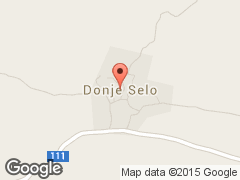
The church can be reached through Donje Selo, along the road connecting Grohote, Srednje Selo, and Maslinica. It is a few kilometers from Grohote, and the drive is short. From the direction of Maslinica, the village can also be reached in a few minutes.
Donje Selo is connected by island bus to Rogač, Grohote, and Maslinica. The timetable adjusts to ferry lines and the season, so arrival and return times should be checked in advance.
There is no large tourist parking area immediately next to the church. The streets of the old core are narrow, so vehicles should be left in permitted widenings or other safe places along the wider road, with the last part approached on foot.
Do not drive deep among the old stone houses if you are not familiar with the street layout. Some passages are very narrow, end in front of private yards, or do not have enough space for easy turning.
Access around the church and cemetery occasionally leads over stone, uneven surfaces and smaller steps. For individuals with reduced mobility, visiting certain parts may be challenging, so it is best to check the most practical approach on-site.
A visit to the church is best combined with a walk through the old core of Donje Selo and a visit to the Brotherhood House with St. Martin's Foot. Nearby, one can see traditional island architecture, stone-paved passages, restored houses, and closed family yards.
St. Martin's Church is not large or lavish like urban churches, but it holds an exceptionally rich history. In one place, it connects an early Christian sarcophagus from the 6th century, a medieval chapel, a Renaissance tabernacle, a Baroque altarpiece, and later additions.
For this reason, it is not only the main church of Donje Selo. It is a place where over a thousand years of Christian, artistic, and local history of the western part of Šolta can be traced.


Church of St. Martin / Comments
Looks like you are not signed in!
How would you like to proceed?
Anonymous comment
Login
Register
Your comment was submitted successfully and it will be published after approval by administrator!
General Conditions of Publication
General Conditions of Publiciation
1. Web page
Web page www.holiday-link.com is an interactive web page where the visitors can put texts, news, photos and video movies regarding the content about tourism, gastronomy, culture and entertainment. Information can be uploaded by the owners, managers, employees, tourist boards, residents and tourists, basically all those who want to introduce the public to the specific content (facilities). The site allows evaluation of the attractiveness of a specific content and it allows writing comments by other visitors. Visitors, who log in and want to publish an information about some content (facility) or promote some tourist service, become users or suppliers and they agree to the general terms and conditions that are stipulated here and are obliged to act in accordance with the general terms and conditions (general conditions do not apply if a person is only visiting the page). A person can become a user by signing up with a user name and a password. The user agrees to put the accurate access data, name and surname and the address. Contents that users publish will be signed with a nickname they choose, while the personal data will be used in accordance with the privacy statement. Persons under the age of thirteen are not allowed to enter any content. General terms can be changed from time to time and if the user or supplier doesn’t agree with the changed general terms and conditions he can remove his content from the site.
2. Content
The page is not the media that publishes editorial program contents but the page where the visitors publish information that serve for the educational and cultural public informing about the touristic, cultural and gastronomic contents (facilities). The goal of the site is to collect the information that will give the tourists, as well as the locals, the insight into touristic, cultural and gastronomic offer of the certain location (city, region and country). Publishing the information about the content (information on facilities) is completely free of charge. Except the touristic content , on these pages, providers of various services in tourism may publish and advertise services they offer. These are, further in the text, referred to as a suppliers. Users and suppliers are solely responsible for the publication of their contents in accordance with the statement of responsibility.
3. User obligations
Each user is obliged to use the website in accordance with the general terms and conditions. By publishing the certain text, comment, photo or video movie on the site, the user guarantees that the published information are true, and that they are not copyrighted by a third party. Each user is morally and materially responsible for the publication of content. It is forbidden to copy texts from other websites. Administrators review entered contents and approve them for publishing. Holiday-Link.com has the right not to show the content it finds inappropriate, untrue or offensive. The owners, managers or employees of the gastronomic facilities (eg. restaurants) have the right to reply to the articles and comments on their own content. The owners have the right to request the removal of the text regarding their facilities if they find it inappropriate. The complaint can be send to complain@holiday-link.com. By publishing the content, the user is giving the exclusive, royalty-free, perpetual transferable, irrevocable and fully sublicensable licence (copyright) to use, reproduce modify, adapt, translate, distribute, publish and publicly display subscribed content to the Holiday-Link.com and its affiliates.
4. The obligations of suppliers of tourist services (accommodation and other services)
Company Holiday-Link.com Ltd acts as advertising website on this website and not as a tour operator or intermediary travel agency. Suppliers of tourist services who register their capacity on this site, pay the commercial advertising model they choose. Interaction, regarding arranging a specific accommodation or other tourist service, is done directly between supplier and visitor. Visitors arrange the accommodation or some other touristic service directly with the suppliers and pay the arranged service to them. Suppliers are responsible for all entered data, images, prices and more. Suppliers guarantee that they have all licences necessary to carry out the services they offer, and to operate in accordance with the laws of their home country. By purchasing certain service, visitor accepts the terms and conditions of a supplier from whom he purchased the service. Holiday-Link will check each supplier before putting its facilities to be visible on the page.
5. Statement of Responsibility
The information, that users and suppliers are entering, can be wrong. Holiday-Link.com does not check the entry of the information, pictures and movies and cannot guarantee their accuracy and it disclaims any responsibility for any incorrect data. If you notice a certain misstatement, inaccuracy or inadequacy in any content, please contact us by e-mail: complain@holiday-link.com The responsibility, for every information about some content, is on the user who entered the information. Suppliers, who advertise touristic services via this website, act as independent entrepreneurs. They enter the data about their services , as well as the pictures and the prices, on their own. Holiday-Link.com does not check entered data and disclaims responsibility regarding the errors that can occur during the entering. Suppliers have to own all the licences regarding the services they offer, and they have to respect the laws and regulations of the home country. Visitor arranges the specific service directly with the supplier, on the basis of data that is entered by a supplier as independent entrepreneur, and he pays it directly to the supplier. Therefore, Holiday-Link.com disclaims responsibility for any problem related to the certain reservation.
6. Privacy Policy
When logging into the website, users and suppliers have to enter some personal data (name and surname, e-mail, address, phone number, etc.). Holiday-Link.com guarantees that this data will be kept secret and will not be forwarded to the third parties. Holiday-Link.com can use an user and a supplier e-mail for sending necessarry informaion and for advertising.
7. Cookie Policy
Cookies are small text files that can be stored into device of a visitor if it is allowed by a web browser. Holiday-Link.com uses cookies to provide a better user experience on the website for the visitors. Also, while visiting Holiday-Link.com, you can automatically collect a certain data.
8. Court Jurisdiction
In case of any dispute, related to the site holiday-link.com, the court in Split and the Croatian law are competent.