Must visit(/)
Visit(/)
Skip(/)
Rogač Šolta – Beaches, Ferry, Restaurants and Local Guide
| Tourist guide Rogac | Tourist facilities |
Rogač on Šolta – Ferry Port, Tranquil Beaches and Practical Base for Exploring the Island
Rogač is the main maritime entry point on Šolta and the only island settlement where ferries regularly arrive from Split, transporting passengers and vehicles. It is located in a deep bay on the northern coast of the island, approximately two kilometers from Grohote. For most visitors, Rogač is the first encounter with Šolta, but it is not just a port to pass through quickly. Behind the ferry terminal lies a small and quiet coastal settlement with stone houses, local moorings, a few restaurants, and a series of bathing spots scattered along the bay.
Rogač is not a typical tourist destination with a long promenade, hotels, numerous shops, and evening entertainment. Its rhythm is tied to the arrivals of ferries, boats, sailors, and the daily life of its residents. When a ferry arrives, the port briefly fills with cars, buses, and passengers. Just a few minutes after its departure, it becomes calm again. This alternation of brief busyness and long peaceful periods best describes the atmosphere of the place.
Location of Rogač on Šolta
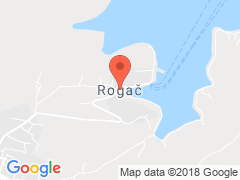
Rogač is situated on the northern coast of Šolta, opposite Split and the central Dalmatian mainland. The bay is deeply embedded in the land, and the settlement has developed along its western and eastern shores. The ferry terminal is located on the eastern side of the inner part of the port, while older houses, local moorings, the Church of St. Teresa of Avila, and the Pasarela restaurant are found along the western side of the bay.
The main island road runs above Rogač, connecting it to Grohote. From Grohote, the road branches towards Maslinica and Donje Selo to the west, and towards Nečujam, Gornje Selo, and Stomorska to the east. Due to this location, Rogač is a practical starting point for exploring the entire Šolta, especially for guests arriving on the island by car.
It takes just a few minutes to drive to Grohote. Maslinica is approximately nine kilometers away, Nečujam about eight kilometers, and Stomorska around twelve kilometers. No larger settlement on the island is far away, allowing for visits to both the western and eastern sides of Šolta in one day.
Arrival by Ferry from Split
The ferry line between Split and Rogač operates year-round. The journey takes about an hour, and the ferry carries passengers, cars, motorcycles, and bicycles. The number of departures varies by season, with more in summer than in winter.
Passengers with cars should arrive at the Split ferry port early, especially on weekends and during July and August. The same rule applies for the return trip – during the peak season, it is advisable to choose a desired departure time from Rogač in advance and arrive at the port with enough time for boarding.
Passengers without cars can continue to other places on Šolta by local bus after disembarking from the ferry. Buses connect Rogač with Grohote, Maslinica, Nečujam, Gornje Selo, and Stomorska, with departures generally timed to the arrivals and departures of ferries. However, the schedule should be checked in advance as it changes throughout the year.
What Rogač Looks Like
Rogač does not have a classic center with a main square and a long pedestrian promenade. The settlement is arranged around the bay, with individual parts connected by a coastal road. The most traffic occurs around the ferry terminal, bus stop, and hospitality establishments near the port.
The western side of the bay is quieter and more pleasant for walking. Along the road, old and newer houses, small piers, and boats at moorings line up. This path leads to the Church of St. Teresa of Avila, the Pasarela restaurant, and Banje beach. Continuing further towards the outer part of the bay, one reaches the smaller bathing spots Brbavica and Kašjun.
The eastern shore is more connected to ferry and nautical traffic. There are the terminal, a larger part of the port, and some moorings. Although Rogač is the main island port, outside of ferry arrival times, it does not give the impression of a large or noisy traffic hub.
History of Rogač
Rogač has served for centuries as the port for Grohote, the oldest and largest settlement in the interior of Šolta. The bay is mentioned in historical records as early as the 13th century, while the present settlement developed more significantly during the 19th century when the residents of Grohote gradually settled by the sea.
From the port, island wine, olive oil, lime, wood, and other products were once transported by ship. Rogač thus served as a link between the interior of Šolta and Split, as well as other Dalmatian and Adriatic ports. Its primary role has not changed significantly – it remains the main place through which people, vehicles, and goods arrive on the island.
The most important historical building in the settlement is the Church of St. Teresa of Avila. This small stone church is located on the western side of the bay and fits easily into a walk from the ferry terminal to Banje beach. It is modest on the outside, with a simple facade and a bell gable, while inside it houses an altar painting, statues, and votive items related to sailors and island emigrants.
Beaches in Rogač
The coast of Rogač consists of several smaller pebble beaches, concrete sections, rocky shores, and local sea access points. There is no large city beach that gathers all bathers. The advantage of such a layout is that a quieter spot can almost always be found along the bay, especially when moving away from the ferry terminal.
Banje beach is located on the western side of the bay, opposite the ferry port. It is the most well-known and practical beach in Rogač for families with children. The shore is mostly pebbly, the entry into the sea is easier than at rocky bathing spots, and there is some space for staying and children's facilities near the beach. It can be reached on foot from the port by walking through the inner part of the bay.
Luka Rogač beach is closer to the central part of the port. It is smaller than Banje and consists of a pebbly area, concrete, and rocky surfaces. It is practical for guests staying in nearby apartments and for anyone who wants to swim without heading to the outer part of the bay.
Brbavica, locally referred to as Garma in some descriptions, is a small beach located below the coastal road and road construction. It has a short pebbly shore, concrete sections, and rocks. It does not offer much space or tourist facilities, but it is interesting due to its unusual location and shade created during part of the day under the road and surrounding vegetation.
Kašjun is located further towards the northwestern edge of Rogač. It takes about twenty minutes to walk there from the ferry port. The beach is small, natural, and surrounded by rocks and Mediterranean vegetation. In the middle, there is a pebbly entry into the sea, while rocky surfaces are found along the edges. There are no hospitality facilities, showers, toilets, or equipment rentals at Kašjun, so all necessities should be brought along.
In addition to the named beaches, residents and guests swim along smaller piers, concrete shores, and rocks throughout the bay. When choosing a spot, care should be taken to avoid moored boats and not to swim through areas designated for vessel entry into the port.
Sea and Swimming Conditions
The sea in Rogač is generally calm as the bay is deep and well sheltered from most waves. However, it is an active ferry and nautical port, so swimming should always be done away from the main terminal, ferry ramp, and navigation routes.
For families with small children, Banje beach is the most practical. Rogač port is suitable for those who want to be closer to homes and restaurants, while Brbavica and Kašjun are better for swimmers who do not mind rocks, smaller spaces, and the absence of facilities. Water shoes can be useful at all beaches as the bottom alternates between pebbles, stones, and rocks.
Natural shade is not equally available along all parts of the coast. It is occasionally provided by pines, tamarisks, and other trees, but for a full day stay, it is advisable to bring an umbrella. In the more remote rocky areas around Kašjun, one may also encounter naturists, although there is no officially designated nudist complex.
Restaurants and Food in Rogač
The dining options in Rogač are limited. The notable establishments are Restaurant Pasarela and Bistro-Pizzeria Rogač, while a wider selection of konobas and restaurants can be found in Grohote, Maslinica, Nečujam, or Stomorska.
Restaurant Pasarela is located on the western side of the bay, by the sea and on the way to Banje beach. It is most pleasant to sit on the outdoor terrace overlooking the port and boats. The menu focuses on Dalmatian and Mediterranean cuisine, including fish, seafood, risottos, pasta, and meat dishes. During the peak season, it is advisable to reserve a table by the sea in advance.
Bistro-Pizzeria Rogač is located right next to the ferry port. It is a more practical choice for pizza, grilled dishes, calamari, salads, drinks, or takeout meals. It is most suitable for travelers waiting for a ferry or wanting to eat something immediately after arriving on the island. The terrace faces the port, making the atmosphere livelier than at Pasarela.
For more serious grocery shopping and a wider selection of daily necessities, it is more practical to go to nearby Grohote. Rogač is not a place where one should expect a large supermarket, numerous shops, bakeries, or a series of cafes along the promenade. Guests staying for several days should plan their shopping in advance.
Accommodation in Rogač
Accommodation in Rogač is mainly offered in private apartments, holiday homes, and rooms. There are no large hotel complexes or dense tourist resorts. Houses are distributed along both sides of the bay and on the slopes above the sea.
Accommodation near the ferry terminal is practical for guests arriving without a car or frequently traveling to Split. However, one should expect short periods of noise when the ferry arrives, when vehicles are unloaded, and when boats are filled for the return trip.
The western side of the bay is quieter and closer to Banje, Luka Rogač, Brbavica, and Kašjun beaches. When booking accommodation, it is advisable to check the actual distance from the sea, the slope of the access road, and whether the property has its own parking. Some houses may appear very close to the coast on the map, but access may be via a steeper or narrower road.
Parking in Rogač
The highest traffic pressure is felt in the area of the ferry port. Some areas are designated for vehicles waiting to board, so cars should not be left in the ferry lanes or in spaces needed for turning buses and trucks.
There are public parking areas in the port, but rules and any potential fees should be checked on-site as they may change. To board the ferry, it is necessary to move the car to the appropriate boarding line in time.
Along the western side of the bay and near some beaches, parking is limited. The road is narrow in some sections, and available widenings are used by residents of nearby houses. It is safest to use the accommodation's parking or an organized public area and continue on foot to the beaches.
Rogač Without a Car
Staying in Rogač is possible without a car, especially when the goal is to spend a few peaceful days by the sea. The beaches, two restaurants, and the ferry terminal are within walking distance, and buses can be taken to larger island towns.
For more frequent exploration of distant bays and the southern coast, a car, scooter, or bicycle is more practical. The bus connects the main settlements, but does not go to every beach and secluded bay. Taxi transport should be arranged in advance, especially in the evening and outside the main season.
Walking from Rogač to Grohote is possible, but the road is not primarily designed as a tourist walking path. On hot summer days, it is more comfortable to use a bus or other means of transport. The bike ride to Grohote is not long, but it should be considered immediately after leaving the port.
What to See and Do in Rogač
Rogač is best explored by taking a leisurely walk around the bay. From the ferry terminal, one can head towards the inner part of the port, continue along the western shore to the Church of St. Teresa of Avila, the Pasarela restaurant, and Banje beach, and then extend towards Brbavica and Kašjun.
The port is also interesting for sailors. It has moorings for boats and yachts, and its location in the middle of the northern coast makes it a practical stop before continuing to Split, Brač, Drvenik, or other Šoltan bays. Due to ferry and other maritime traffic, caution should be exercised when entering and exiting.
Rogač is a good starting point for cycling trips. From the port, one first climbs towards Grohote, and then can continue towards Maslinica, Nečujam, or the interior of the island. In Grohote, one can explore the old stone core, the Church of St. Stephen, and archaeological remains, while olive groves, vineyards, and family farms are scattered throughout the central part of Šolta.
Nightlife and Atmosphere
There are no clubs, large concerts, or long evening promenades in Rogač. After the last ferries, the place quickly calms down. Evenings are mostly spent on the terrace of apartments, dining at Pasarela, or taking a leisurely walk by the sea.
This atmosphere suits couples, families, and guests who prefer early swimming, reading by the sea, and quiet evenings. Younger travelers seeking a wider selection of bars, music, and a livelier promenade may feel more at home in Stomorska or Maslinica.
Who Would Enjoy a Holiday in Rogač
Rogač is most suitable for guests who value good connectivity with Split, peaceful accommodation, and the ability to reach several beaches without a car. It is also practical for short stays, business visits, sailors, and travelers using it as a base for exploring Šolta.
Families will appreciate the proximity to the ferry and Banje beach, but should be aware that there are not many children's facilities in the area. Couples may enjoy the quiet western side of the bay and dining by the sea. Active guests will find Rogač a good starting position for cycling and exploring the island.
It will not suit those expecting a large tourist center, wide organized beaches, a vibrant nightlife, and dozens of restaurants. Rogač is primarily a small island port where tourism is integrated into everyday life, rather than a place entirely dedicated to tourists.
Day Trip to Rogač
Rogač can be visited as a day trip from Split, but it is not ideal to spend the entire day only in the ferry port area. After arrival, one can walk along the western side of the bay, visit the Church of St. Teresa of Avila, swim at Banje, and have lunch at Pasarela.
Another option is to continue by bus to Grohote, Maslinica, Nečujam, or Stomorska. When planning the return, it is important to leave enough time to get back to Rogač, especially if the bus departure does not perfectly align with the ferry. The last ferry is not the moment to return from a distant beach without pre-arranged transport.
Best Time to Visit
June and September are particularly pleasant for staying in Rogač. The sea is warm enough for swimming, traffic in the port is lighter than at the peak of the season, and there is more space on the smaller beaches. July and August bring more ferry departures, open seasonal facilities, and a livelier atmosphere, but also more cars and greater parking pressure.
Spring and autumn are suitable for walking, cycling, and exploring the interior of Šolta. Outside of summer, it is advisable to check the working hours of restaurants and shops, as some hospitality offerings operate seasonally or on a reduced schedule.
Why Choose Rogač
The greatest advantage of Rogač is the easy access. After about an hour of sailing from Split, one arrives directly in a small island settlement from which it is easy to continue to any part of Šolta. At the same time, it is not necessary to leave immediately. A few beaches, a quiet coast, a restaurant by the sea, and apartments scattered around the bay are sufficient for a simple holiday without major plans.
Rogač does not attempt to create the impression of a postcard designed exclusively for tourists. Ferries, buses, boats, houses, small piers, and bathers share the same space. This gives the place a recognizable island character. It will be best understood by those who give it a little time after the port empties, leaving only the sea, moored boats, and silence along the shore.


Service information
- Timezone and time:
- Europe/Zagreb (01:28)
- Currency:
- Euro
- Internet TLD:
- .hr
- Population:
- 134
- Altitude:
- 11 m
- Country code:
- +385
- Town code :
- 021
- Seas:
- Adriatic sea
- Languages spoken:
- Croatian
- Map position:
- 43.3957557, 16.2974268
Must visit
Public transport
Transportation stations (in range of 20 km)
- Plane:
- Split Airport
- Port:
- Rogac, Uvala Mala Luka
- Marinas, moorings and anchorages:
- Necujam, Donja Krusica, Tatinja, Joria, Poganica, Sesula, Gornja Krusica, Maslinica, Tanki Ratak, Vela Travna, Livka, Duga Ciovo, Uvala Krnjas, Sveti Fumija, Gokrug, Uvala Razetinovac, Stiniva - Milna, Donji Okrug, ACI marina Trogir, Bobovisca, Marina Vlaska, Osibova, ACI marina Milna, Seget, Sutivan, Vranjica, ACI marina Split, Kastel Novi, Marina Zenta, Vinisce, Borak, Mirca, Vela Rina, Kastel Kambelovac, Marina Kastela, Poljica, Marina Agana
Accommodation and offer: Vacation rentals
Showing 1-7 of 7 items.
Publish tourist offer
Owners of apartments, rooms, houses, pensions, hotels, campsites and so on. Publish your offer FOR FREE. Payment shall be made only after the receipt of a specific inquiry or realized booking.
Publish an article
Owners, managers, employees
restaurants, clubs, events and other activities, write your review on the tourist map. Publish articles, photos and video FOR FREE.
Travelers You have visited an interesting restaurant, bar, attraction, event ? Share your positive experiences ! Write an article, post a video or photos you've taken.
Recommended locations
Croatia - All Destinations