Must visit(/)
Visit(/)
Skip(/)
Šolta Island – Beaches, Villages, and Travel Guide
| Tourist guide Island of Solta | Tourist facilities |
Šolta Island – Beaches, Villages, Attractions, and Travel Guide
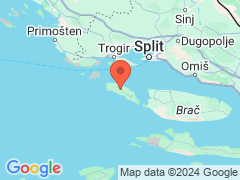
Šolta Island is located in central Dalmatia, opposite Split, separated by the Split Channel. It is close enough to the mainland for a day trip, but spending several days is worthwhile to explore its villages, beaches, southern bays, and interior. Šolta does not have large tourist complexes or urban hustle. Its offerings include small coastal towns, old stone villages, olive groves, family farms, natural bays, and waters that are almost completely detached from everyday crowds just a few minutes away from the settlements.
The island covers 58.18 square kilometers, is approximately 19 kilometers long, and had a population of 1,975 according to the 2021 Census. Šolta has eight official settlements: Rogač, Grohote, Nečujam, Stomorska, Gornje Selo, Srednje Selo, Donje Selo, and Maslinica. Smaller coastal areas and bays have developed around them, such as Donja and Gornja Krušica, Šešula, Stračinska, and other more secluded parts of the island.
The northern side of Šolta faces Split and is home to the main port and the most popular tourist spots. The southern coast is significantly wilder, steeper, and less developed. There, bays line up that can be reached by boat, on foot, by bicycle, or via dirt roads, often without tourist facilities or organized parking.
How to Get to Šolta Island
The main connection between Šolta and the mainland is the ferry line from Split to Rogač. The journey takes approximately one hour, and the ferry carries passengers, cars, motorcycles, and bicycles. The schedule changes depending on the season, so it is advisable to check current departures and purchase tickets for the desired time before traveling. During July and August, it is best to arrive at the Split ferry port early if traveling by car.
The ferry docks in Rogač, the main island port on the northern side of Šolta. From Rogač, it is a quick drive to Grohote, where traffic splits towards Maslinica to the west and Nečujam, Gornje Selo, and Stomorska to the east.
Island bus lines connect Rogač with larger settlements, and some departures are timed to coincide with ferry arrivals and departures. The bus is practical for reaching accommodations in larger towns but is not the best choice for exploring remote beaches, southern bays, and places off the main road. The schedule is not the same throughout the year and should be checked shortly before traveling.
Getting Around Šolta
For exploring most of the island, a car, scooter, or bicycle is the most practical option. The main road between Maslinica, Grohote, Gornje Selo, and Stomorska is paved, and the distances between settlements are not large. Driving from one end of the island to the other does not take long, but for turns towards the bays, one should expect narrower local roads, dirt paths, and the last sections to be traversed on foot.
In the centers of coastal towns during summer, it should not be assumed that parking will always be available right by the waterfront or beach. It is more practical to leave the car in a permitted area at the entrance to the narrower part of the settlement and continue on foot.
Bicycling is a good option in spring, early autumn, and cooler summer mornings. The island is not flat, and some routes include longer climbs, rocky dirt paths, and technically demanding descents. For a full day of exploration, a mountain or electric mountain bike is better than a city bike.
Rogač – Ferry Port and Starting Point for Exploring the Island
Rogač is the first place most visitors see when arriving on Šolta by ferry. It developed as a port for nearby Grohote and is now the main transportation hub of the island. When the ferry arrives, the port is lively, but a few minutes away are quieter parts of the coast and smaller beaches.
In the vicinity of Rogač, swimming is possible in the areas of Banja, Garma, and Kašjuna. These are smaller beaches and rocky parts of the coast, suitable for visitors who want to stay close to the port or are waiting for a later ferry. Some access points have steps or uneven surfaces, so not all areas are equally practical for individuals with reduced mobility.
Rogač is a good choice for accommodation if planning to explore multiple parts of the island daily. Grohote can be reached in a few minutes by car, and road connections to the west and east begin right here.
Grohote – The Center of Šolta Island
Grohote is the oldest and largest settlement on the island and serves as its administrative and daily center. It is located inland, above Rogač, at the intersection of the main island roads. Here, there are important public services, a post office, a clinic, a pharmacy, shops, and other facilities that are not always available in smaller tourist towns.
The old part of Grohote consists of stone houses, narrow streets, courtyards, and remnants of traditional island architecture. The parish church of St. Stephen dominates the center, where traces of early Christian heritage have been found. The town also maintains a strong artistic tradition, associated with Šolta's naive painters and gallery spaces.
Grohote is not a place for a classic beach holiday, but it is worth visiting for its old island ambiance, local products, and a better understanding of life in the interior of Šolta. It is best to visit in the morning or evening during summer when walking through the stone streets is more pleasant.
Nečujam – The Largest Bay on Šolta
Nečujam is located on the northern side of the island and is situated in the largest bay of Šolta. The bay consists of eight smaller coves, including Supetar, Piškera, Tiha, Podkamenica, and Šumpjivina. Due to the indented coastline, Nečujam offers various swimming spots, from the main organized beach to smaller pebbly, rocky, and concrete parts of the coast.
The main beach is the most practical for families with children, as accommodations, dining facilities, and other seasonal amenities are nearby. In the more distant parts of the bay, there is more shade and tranquility, but fewer facilities. Some coves can be reached by walking paths, local roads, or trails along the sea.
Nečujam is also connected to Marko Marulić, who stayed and created in this large and quiet bay. The town has a house associated with his stay, while in the bay of Piškera, the remains of an ancient fish pond traditionally linked to Emperor Diocletian can be seen under the sea.
Due to the large bay, multiple beaches, and relatively easy access, Nečujam is a good choice for families and guests who wish to spend most of their holiday by the sea without daily driving around the island.
Stomorska – An Old Maritime Town on Eastern Šolta
Stomorska is located on the northeastern side of the island, approximately 12 kilometers from Rogač. It is the oldest coastal settlement on Šolta and has long been associated with maritime activities, fishing, and transporting island products to Split.
Stone houses descend towards the narrow port, and along the waterfront, there are restaurants, taverns, and cafes. Beaches and entry points to the sea are available on both sides of the bay. Part of the coast consists of organized surfaces and concrete plateaus, while further away, pebbly and rocky areas can be found.
Stomorska is a good choice for visitors who want to stay in a lively but not overly large coastal town. Evening walks take place along the waterfront, restaurants, and docks, while the beaches are accessible without the need for daily car use.
During the peak season, parking near the waterfront can be challenging. Accommodations on the heights above the port often involve stairs and steeper streets, which should be considered when booking with small children, elderly individuals, or large amounts of luggage.
Maslinica – The Western Coast, Castle, and Seven Islets
Maslinica is the only settlement on the western coast of Šolta. It developed around the fortified castle of the Marchi family, built in the early 18th century to protect the new settlement and its port. The renovated castle is now the heritage hotel Martinis Marchi, so the interior is not a classic museum space open for free exploration. However, its facades, tower, and seaside location create the most recognizable historical image of Maslinica.
In front of the settlement lies an archipelago of seven islets: Polebrnjak, Saskinja, Stipanska, Kamik, Balkun, Rudula, and Grmej. They are best viewed from the Punta beach area and the viewpoint near the church of St. Nicholas. The islets can be explored by kayak or boat when weather conditions are favorable, but there are no organized tourist facilities on them.
The main beach Punta is located on the western edge of the settlement and can be reached on foot from the center along the coast. Maslinica is suitable for couples, sailors, and visitors who value views, evening walks, restaurants, and sunsets.
South of the settlement is the bay of Šešula, which can be reached on foot, by bicycle, by car, or by boat. The bay is known as a sheltered anchorage, and during the season, restaurants operate there. Further west is the more natural bay of Šipova, with a small sandy beach and a more challenging access.
Gornje Selo, Srednje Selo, and Donje Selo
The interior of Šolta is an important part of the island, not just a passage to the beaches. Gornje Selo is located more than a hundred meters above sea level and is recognizable for its stone houses, church bell tower, olive groves, and vineyards. Paths lead from the settlement to the bays on the southern coast, including Stračinska, Senjska, and Livka.
Srednje Selo is a small stone settlement between Grohote and Donje Selo. Its old houses, narrow streets, and courtyard complexes preserve the appearance of a former agricultural village. A route suitable for cycling and walking towards Donje Selo and Maslinica runs through this part of the island.
Donje Selo is also connected to olive growing, viticulture, and old island architecture. A path leads from it to Donja Krušica, a small coastal settlement on the northern side of the island.
These villages are best suited for visitors seeking peace, stone houses, proximity to fields, and the opportunity to explore the island by car or bicycle. The sea is not a short walk away from them, so they are not the best choice for guests whose priority is daily swimming without driving.
The Most Beautiful Beaches and Bays on Šolta
Šolta does not have one large beach that represents the entire island. The best choice depends on whether one is looking for easy access, shade, facilities, tranquility, or completely natural coast.
For families and easy access, the main beach in Nečujmu and the Punta beach in Maslinica are practical. In Stomorska, swimming is possible on both sides of the port, with several different access points to the sea, while Rogač has several smaller beaches near the ferry terminal.
The southern bays offer a different experience. Tatinja, Senjska, Stračinska, Jorja, and Livka have a more natural coast, clear open waters, and significantly fewer facilities. They can be reached on foot, by bicycle, by boat, or via dirt roads, depending on the chosen bay. In some locations, a car can only reach a certain part of the road, after which one continues on foot.
When visiting the southern bays, it is essential to bring enough water, food, sun protection, and footwear suitable for rocky terrain. Many do not have dining facilities, sanitary facilities, or organized natural shade. Not all are suitable for small children, elderly individuals, and those with reduced mobility.
Before departure, it is advisable to assess the condition of the road and weather conditions. For boat visits, it is especially important to monitor the wind, as the openness of the southern coast means that a calm bay one day can be exposed to waves under different conditions.
Attractions and Cultural Heritage of Šolta
The cultural heritage of Šolta is not concentrated in one large historical core. It is dispersed across villages, churches, coastal bays, and archaeological sites.
Among the most notable attractions is the Martinis Marchi castle in Maslinica, around which the entire settlement developed. In Nečujmu, there is a house associated with Marko Marulić and the remains of an ancient fish pond in Piškera. On the islet of Stipanska in front of Maslinica, there are remains of an early Christian basilica, but there is no regular line to the islet, and it can be reached by one's own or arranged vessel.
In Grohote, the area around the church of St. Stephen and the old stone core stand out, while in Gornje, Srednje, and Donje Selo, examples of traditional folk architecture, village churches, courtyards, and agricultural buildings can be seen.
Some sites are not organized as museums with fixed working hours. Churches are often not open all day, and archaeological remains may be located on natural and uneven terrain. Before a dedicated visit, it is advisable to check the current possibility of entry or organized tours.
Hiking, Biking, Kayaking, and Boat Excursions
Šolta is suitable for active holidays, especially outside the hottest part of summer. Trails connect coastal towns with inland villages, olive groves, and southern bays. Hiking is most pleasant in spring, during autumn, and early in the morning in summer.
One of the longer cycling routes is the Šolta Loop, which starts in Rogač and connects Maslinica, Grohote, Gornje Selo, and Stomorska. The route is approximately 40 kilometers long and includes climbs, asphalt, and more challenging sections, making it suitable for cyclists in good condition.
In the western part of the island, the Sunset Trail over the 7 islets is a circular mountain biking route that connects Rogač, Grohote, Maslinica, and Donje Selo. For the entire routes, a suitable bike, helmet, enough water, and basic repair tools are necessary.
Kayaking can be used to explore Nečujam, the coast around Maslinica, and the seven islets in front of the settlement. It is important to stay out of main shipping lanes, wear a life jacket, and check the forecast before heading out. For more distant bays and the islet of Stipanska, a motorboat trip or going with someone familiar with the Šolta waters is safer.
What to Eat and Drink on Šolta
Šolta is traditionally associated with olive growing, viticulture, fishing, and beekeeping. Among the most important local products is extra virgin olive oil, which can be tasted and purchased at oil mills and family farms.
The indigenous Šolta wine variety is Dobričić, an old red variety linked to the creation of Plavac Mali. Along with wine and oil, the island produces honey, liqueurs, olives, and other products from local herbs and fruits.
In coastal towns, the offerings focus on fish, shellfish, octopus, grilled dishes, pasta, and simple Dalmatian meals. Agritourism farms in the interior often provide a different experience from restaurants on the waterfront, but visits usually need to be arranged in advance.
During July and August, it is advisable to reserve a table at the more popular restaurants in Maslinica, Stomorska, and secluded bays. Outside the main season, some establishments do not operate daily.
Where to Stay on Šolta
Nečujam is practical for families and guests who want a greater selection of beaches within the same bay. Stomorska is suitable for those who prefer an old coastal town, restaurants, evening walks, and swimming without daily driving.
Maslinica is a good choice for couples, sailors, and visitors who value a well-equipped port, sunsets, a castle, and excursions to the islets. Rogač is conveniently located for exploring the entire island and catching an early ferry.
Grohote, Gornje Selo, Srednje Selo, and Donje Selo are suitable for guests seeking quieter accommodations in stone houses and planning to use a car or bicycle. Accommodations in the southern bays offer greater seclusion, but access, supplies, parking, and distance from shops should be carefully checked.
Is Šolta Suitable for Children and Elderly Individuals?
Šolta can be a good choice for families, but not all parts of the island are equally practical. The easiest accommodations and swimming options are in Nečujmu, along with Punta beach in Maslinica and in parts of Stomorska with organized access to the sea.
Old stone streets, accommodations on heights, and remote southern bays often involve stairs, steeper paths, or uneven terrain. Individuals with reduced mobility should check the distance of accommodations from parking, the slope of the street, and the exact access to the beach before booking.
For small children, secluded rocky bays without shade and facilities are not the best choice. One should expect a longer approach, sharp terrain, deep waters, and a complete lack of supplies.
The Best Time to Visit Šolta
July and August bring the most open restaurants, excursions, and tourist facilities, but also the highest number of visitors, vehicles, and boats. For swimming in a somewhat calmer atmosphere, June and September are very good.
Spring and early autumn are the best for hiking, biking, village sightseeing, and visiting southern bays. The sea in spring may be cooler, but the temperatures are more pleasant for moving around the island.
Šolta is inhabited year-round, but outside the summer season, the tourist offerings are reduced. Some restaurants, bars, excursions, and rental services may not operate or may work on a shortened schedule. Shops and basic services are generally most accessible in Grohote and larger settlements.
How Many Days to Stay on Šolta
Šolta can be visited on a day trip from Split, but then one should choose one part of the island. In one day, it is realistic to connect Rogač and Grohote with Nečujam or Stomorska, or to head towards Maslinica and spend most of the day there.
To explore all the main places, several beaches, and one southern bay, at least three days are needed. A stay of five to seven days allows for more relaxed swimming, a boat trip, a visit to family farms, and exploring the island without daily rush.
Frequently Asked Questions (FAQ)
How to get from Split to Šolta?
From Split, you can take a ferry to Rogač, the main island port. The journey takes approximately 60 minutes. From Rogač, you can continue to other places by bus, taxi, car, scooter, or bicycle.
What is the best place to stay in Šolta?
Nečujam is practical for families and swimming, Stomorska for staying in an old coastal town, Maslinica for couples, sailors, and sunsets, and Rogač for guests who want a good transportation starting point. The inland villages are suitable for those seeking more peace and planning to use a car.
What are the most beautiful beaches in Šolta?
For easy access, the main beach in Nečujam and Punta beach in Maslinica stand out. In Stomorska and Rogač, there are several smaller beaches near the settlement. For a more natural experience, it's worth exploring Šipova, Tatinja, Senjska, Stračinska, and other southern coves, with careful planning of access.
Do you need a car on Šolta?
A car is not necessary for staying within one place, especially in Nečujam, Stomorska, or Maslinica. For exploring the entire island, southern coves, inland villages, and more remote beaches, a car or scooter significantly facilitates movement. Bus lines connect the main settlements, but they are not tailored for visiting every beach.
Is Šolta suitable for a day trip?
Šolta is suitable for a day trip as the ferry from Split takes about an hour. However, it is not practical to explore the entire island in one day. It is best to choose Maslinica, Nečujam, or Stomorska and connect the chosen location with a short visit to Rogač or Grohote.
Service information
- Timezone and time:
- Europe/Zagreb (01:28)
- Currency:
- Euro
- Internet TLD:
- .hr
- Capital of Region:
- Grohote
- Population:
- 1,975
- Area Size:
- 52 km2
- Tel Code:
- +385
- Seas:
- Adriatic sea
- Languages spoken:
- Croatian
Towns / Places
- Donja Krušica, Donje Selo, Gornja Krušica, Gornje Selo, Grohote, Maslinica, Necujam, Rogac, Srednje Selo, Stomorska
Must visit
Transportation stations (in range of 50 km)
- Plane:
- Split Airport, Brac Airport
- Port:
- Rogac, Uvala Mala Luka, Supetar, Hvar, Stari Grad, Bol, Vis, Jelsa, Sumartin
- Marinas, moorings and anchorages:
- Tatinja, Donja Krusica, Necujam, Poganica, Joria, Sesula, Maslinica, Gornja Krusica, Tanki Ratak, Vela Travna, Livka, Uvala Krnjas, Duga Ciovo, Sveti Fumija, Gokrug, Uvala Razetinovac, Donji Okrug, Stiniva - Milna, Osibova, Marina Vlaska, ACI marina Trogir, Bobovisca, ACI marina Milna, Seget, Sutivan, Vranjica, Borak, Vinisce, Vela Rina, ACI marina Split, Kastel Novi, Poljica, Marina Zenta, Mirca, Marina Agana, Kastel Kambelovac, Marina Kastela, Pelegrin, Stari Trogir, Parja, Stobrec, Sicenica, Vira, Strozanac, Vela Garska, Stiniva - Hvar, Mala Garska, Soline, Splitska, Bajnice, Tarsce, ACI marina Palmizana, Lucisce, Vinogradisce, Krilo, Glavna, Marinkovac, Borovica, Jerolim Island, Postira, Stivancica, Razanj, Luka Tiha, Orisac, Stupin, Dugi Rat, Marina Frapa, Smokvica, Uvala Lovrecina, Zukova, Zarace, Dubovica Boatyard, Omis, Marina Kremik, Primosten, Nedjelja, Grebastica, ACI marina Vrboska, Mirine, Hudomescica, Ivan Dolac, Rukavac, Konopjikova, Komiza, Zaboric, Luka, Mimice Kutlesa, Krapanj Island, Brodarica, Zavala, Povlja, Prapratna, Pisak, Lovisce, Studena, Manastir, Voscica, Marina Solaris, Marina Mandalina, Zablace, Bisevo, Rasotica, Vela Stiniva
Accommodation and offer: Vacation rentals
Showing 1-15 of 94 items.
Must visit(/)
Visit(/)
Skip(/)
Publish tourist offer
Owners of apartments, rooms, houses, pensions, hotels, campsites and so on. Publish your offer FOR FREE. Payment shall be made only after the receipt of a specific inquiry or realized booking.
Publish an article
Owners, managers, employees
restaurants, clubs, events and other activities, write your review on the tourist map. Publish articles, photos and video FOR FREE.
Travelers You have visited an interesting restaurant, bar, attraction, event ? Share your positive experiences ! Write an article, post a video or photos you've taken.
Recommended locations
Croatia - All Destinations